
Repairs and voids
Housing disrepair works for social landlords
Remedial works on homes subject to a disrepair complaint or claim, scheduled and evidenced.
Housing disrepair works are the remedial repairs a landlord carries out when a tenant has complained or made a claim that the home is in disrepair or unfit. We carry out the works your surveyor or expert schedule identifies, keep a careful record and help you show the repairs were done properly and promptly.
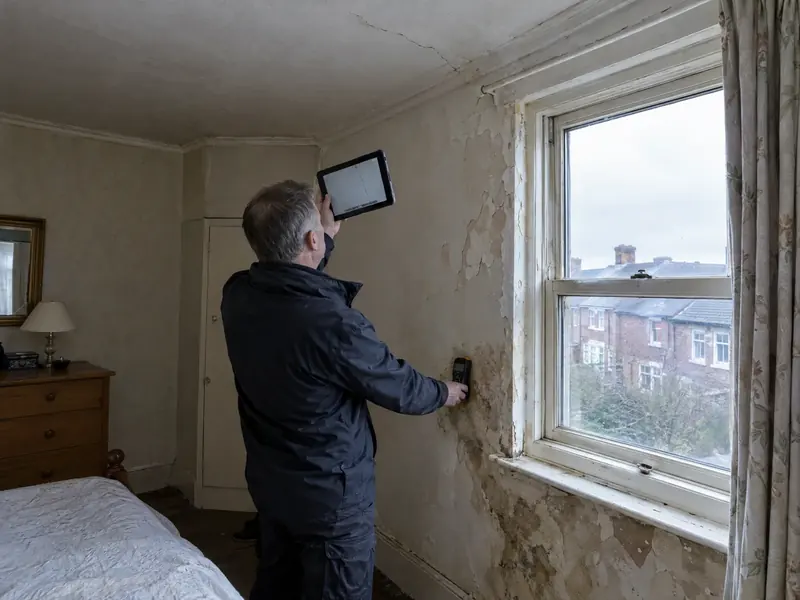
How do we approach housing disrepair works?
We do not act for claimants and we do not give legal advice. We are a works contractor: we price and complete the schedule of works, keep tenants informed, and produce the evidence your housing, legal or insurance team needs.
What is included?
- Works to an agreed schedule from your surveyor or a joint expert
- Damp, mould and leak remediation, including the causes
- Plaster, joinery, windows, doors and roof repairs
- Heating, hot water and ventilation defects
- Temporary measures where works cannot start at once
- Tenant liaison and evidenced access attempts
- Completion report with photographs, dates and sign-off
What do we hand over at the end?
- Item-by-item completion against the schedule
- Dated photographs before, during and after
- Access log including refused or missed appointments
- Certificates for any electrical or gas work
Who is this service for?
- Housing associations clearing a disrepair caseload
- Council legal and housing teams
- Landlords' insurers and loss adjusters
Process
How does each job run?
Schedule received
You send the schedule of works and any deadlines set by your legal team or the court.
Price and programme
We price each item and give a programme with start and finish dates.
Works with records
Every visit, access attempt and completed item is recorded and photographed.
Completion report
You receive a completion report suitable for your file, with a list of anything that could not be done and why.
Rules by nation
Which rules shape housing disrepair works in each UK nation?
The legal duties sit with the landlord. These are the rules that set the timescales and standards we work to, as checked on 31 October 2026.
In England, housing conditions claims follow the Pre-Action Protocol for Housing Conditions Claims: the landlord responds to a letter of claim within 20 working days with a schedule of works, and any expert inspection follows within 20 working days of that response. The Housing Ombudsman's Complaint Handling Code has been statutory since April 2024.
Awaab's Law (the Hazards in Social Housing (Prescribed Requirements) (England) Regulations 2025) has applied to social landlords since 27 October 2025. Emergency hazards must be investigated and made safe within 24 hours. Significant damp and mould hazards must be investigated within 10 working days, with safety work within 5 working days of the investigation. Phase 2, approved by Parliament in October 2026, extends the rules from 30 November 2026 to hazards including excess cold and heat, falls, fire, electrical hazards and hygiene.
Decent Homes Standard (England)Disrepair claims in Wales follow the civil procedure rules that apply in Wales, alongside the Renting Homes (Wales) fitness and repair obligations.
Awaab's Law applies in England only, and we found no Welsh equivalent when we checked in October 2026. In Wales, the Renting Homes fitness rules list damp and mould among the matters that can make a home unfit, and WHQS 2023 requires homes to be free from damp.
WHQS 2023 (Wales)Scotland has its own court procedures. Repair obligations and the new investigation and repair timescales for damp and mould apply to Scottish secure tenancies.
Scotland has its own rules: the Investigation and Commencement of Repair (Scotland) Regulations 2026 have applied since 6 October 2026. Reported damp or mould must be investigated within 10 working days, the tenant given a written summary within 3 working days, and repairs started within 5 working days.
SHQS (Scotland)Disrepair cases follow Northern Ireland court procedures and the landlord's repair obligations.
Awaab's Law applies in England only, and we found no Northern Ireland equivalent when we checked in October 2026. Landlords' repair obligations and the Northern Ireland Decent Homes Standard still apply.
Decent Homes Standard (NI)Guide prices
What do housing disrepair works cost?
Rounded planning figures with their sources and VAT basis. Your price depends on the survey, your specification and the region. Use our programme budget tool for a regional estimate.
| Item | Unit | Guide range | Basis |
|---|---|---|---|
| Disrepair schedule of works | per case | £1,500–£8,000 | Our estimate: Schedules vary too widely for a published benchmark. VAT basis: our estimate, ex VAT. |
Prices checked 31 October 2026. See all guide prices and regional factors.
Questions
Housing disrepair works: common questions
Do you act for tenants making claims?
No. We work only for landlords and their agents, carrying out the repairs.
Can you work to court or settlement deadlines?
Yes. Give us the deadline and we will tell you whether the programme can meet it and what would help.
What if the tenant will not give access?
We record every attempt: date, time, method and outcome. That record is often as important as the repair itself.
Can you also fix the cause, not just the symptom?
Yes, and we recommend it. Mould that is washed off without fixing ventilation, insulation or a leak usually comes back, which is often how a second claim starts.
Related
Which services often go with housing disrepair works?
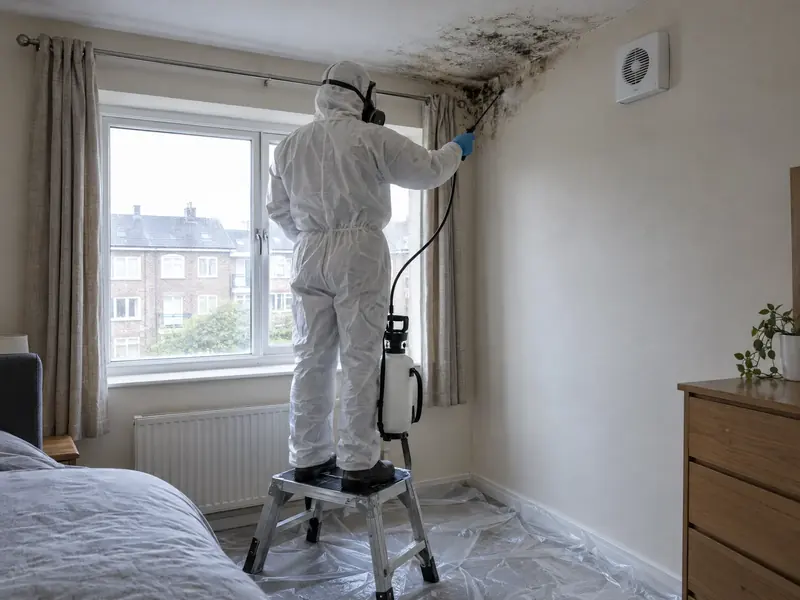
Damp and mould remediation
Mould treatment plus the fix behind it: ventilation, insulation, leaks and cold spots.
Learn more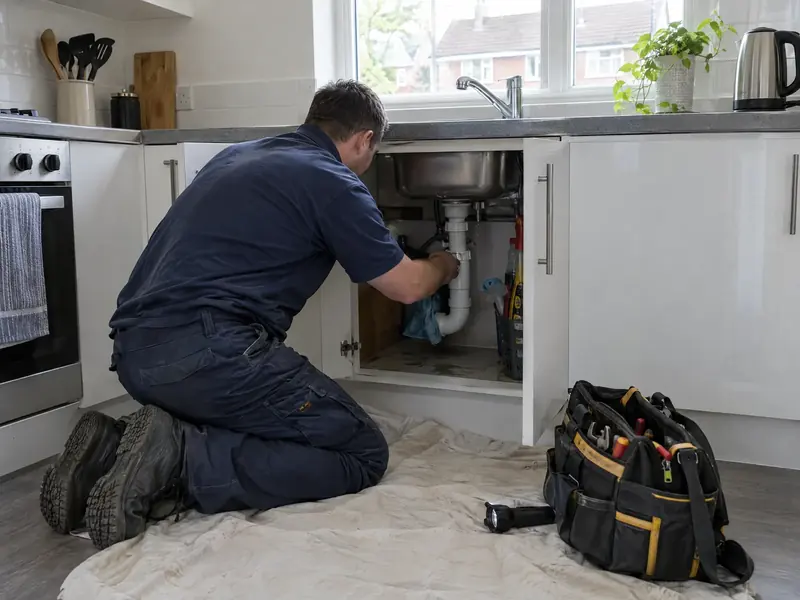
Responsive repairs
Day-to-day repairs in occupied homes, raised by your contact centre and closed with evidence.
Learn more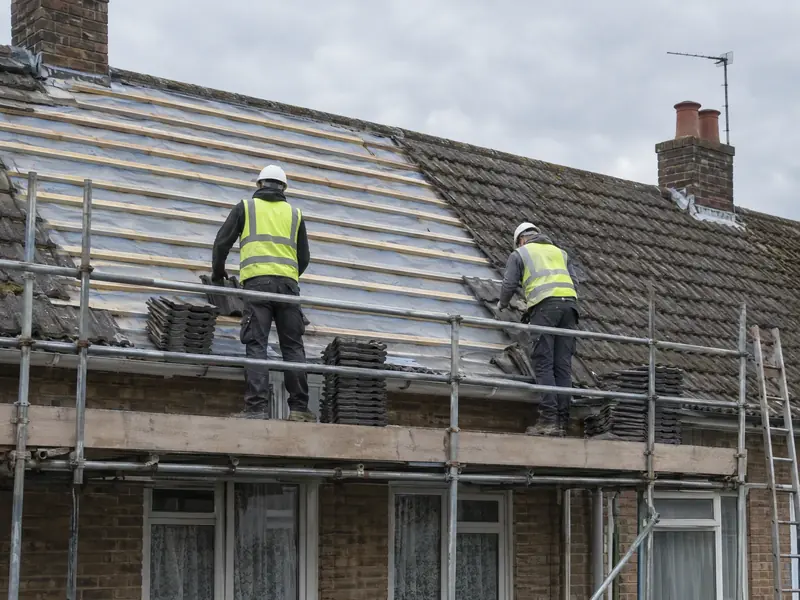
Roofing and rainwater goods
Roof repairs and renewals, fascias, soffits, gutters and downpipes on houses and low-rise blocks.
Learn moreFurther reading: Awaab's Law explained for social landlords · Housing disrepair claims: the landlord's works route