
Damp, mould and building fabric
Roofing and rainwater goods for social landlords
Roof repairs and renewals, fascias, soffits, gutters and downpipes on houses and low-rise blocks.
Roofing and rainwater goods work covers repairing and replacing pitched and flat roofs, chimneys, fascias, soffits, gutters and downpipes. On social housing it is often planned as part of a stock programme, but it is also one of the most common causes of damp and mould calls.
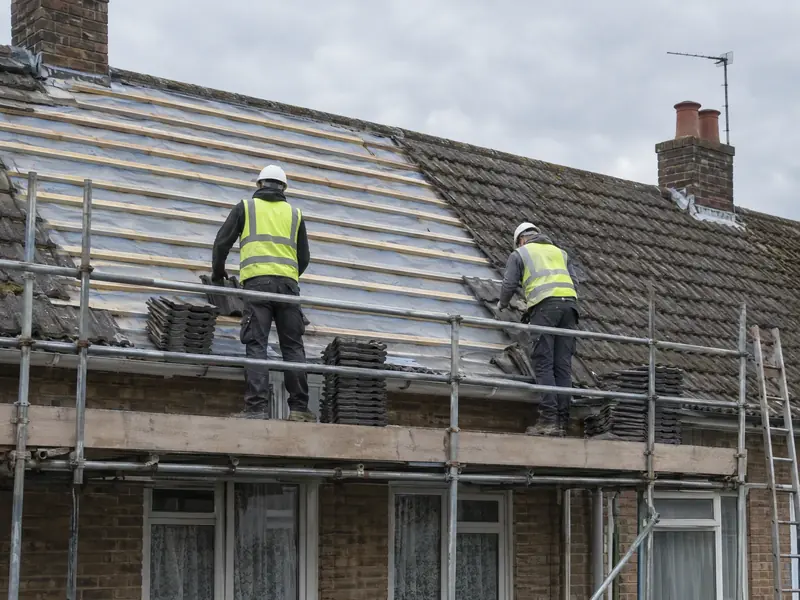
How do we approach roofing and rainwater goods works?
We carry out single roof repairs, whole-roof renewals and programmes across streets and estates of houses and low-rise blocks. Every programme starts with a survey of the roof and the loft, so ventilation and insulation are planned with the covering, not as an afterthought.
What is included?
- Pitched roof re-covering with breathable membrane and new battens
- Flat roof renewal in felt, single-ply or liquid systems
- Chimney repairs, flashings, leadwork and valleys
- Fascias, soffits and bargeboards in uPVC or painted timber
- Gutters, downpipes and gullies cleared, repaired or renewed
- Loft ventilation and insulation top-ups during roof works
- Scaffold, protection and resident notices
What do we hand over at the end?
- Roof and loft survey photos
- Completion photographs
- Product and system documents
- Asbestos information where relevant
Who is this service for?
- Landlords with stock condition-led roof programmes
- Responsive teams needing a specialist roofer
- Councils and HAs dealing with leaks behind damp complaints
Process
How does each job run?
Roof and loft survey
Condition, covering type, ventilation, insulation and any asbestos-containing materials are recorded.
Scope and programme
A priced scope per property and a programme that groups neighbouring homes to share scaffold.
Works
Strip, repair or renew with daily clean-ups and protection for residents.
Handover
Completion photos, guarantee documents for any system used and a list of anything found.
Rules by nation
Which rules shape roofing and rainwater goods works in each UK nation?
The legal duties sit with the landlord. These are the rules that set the timescales and standards we work to, as checked on 31 October 2026.
Under the Control of Asbestos Regulations 2012, the presence of asbestos must be assessed (or presumed) before work that could disturb it, and a refurbishment and demolition survey is needed before intrusive work in buildings built or refurbished before 2000. Licensed asbestos work is carried out only by licensed contractors.
Social landlords are commercial clients under the Construction (Design and Management) Regulations 2015, so the full client duties apply. Where there is more than one contractor, the client appoints a principal designer and a principal contractor. A project must be notified to HSE if it lasts more than 30 working days with more than 20 workers on site at once, or exceeds 500 person-days.
Replacement windows, heating systems and some electrical work are controlled under the Building Regulations. In higher-risk buildings (18 metres or 7 storeys and above, with two or more homes), building work needs Building Safety Regulator approval before it starts unless it is exempt. Most repairs and like-for-like replacements are exempt, but heating systems, fuse boxes and glazing units are not.
Decent Homes Standard (England)Under the Control of Asbestos Regulations 2012, the presence of asbestos must be assessed (or presumed) before work that could disturb it, and a refurbishment and demolition survey is needed before intrusive work in buildings built or refurbished before 2000. Licensed asbestos work is carried out only by licensed contractors.
Social landlords are commercial clients under the Construction (Design and Management) Regulations 2015, so the full client duties apply. Where there is more than one contractor, the client appoints a principal designer and a principal contractor. A project must be notified to HSE if it lasts more than 30 working days with more than 20 workers on site at once, or exceeds 500 person-days.
Replacement windows, heating systems and some electrical work are controlled under the Building Regulations in Wales, and are self-certified by a competent person scheme installer or approved by building control.
WHQS 2023 (Wales)Under the Control of Asbestos Regulations 2012, the presence of asbestos must be assessed (or presumed) before work that could disturb it, and a refurbishment and demolition survey is needed before intrusive work in buildings built or refurbished before 2000. Licensed asbestos work is carried out only by licensed contractors.
Social landlords are commercial clients under the Construction (Design and Management) Regulations 2015, so the full client duties apply. Where there is more than one contractor, the client appoints a principal designer and a principal contractor. A project must be notified to HSE if it lasts more than 30 working days with more than 20 workers on site at once, or exceeds 500 person-days.
In Scotland, building work, conversion or demolition needs a building warrant unless it is exempt, with a completion certificate at the end. The council's building standards service is the verifier.
SHQS (Scotland)Northern Ireland has its own asbestos regulations, the Control of Asbestos Regulations (Northern Ireland) 2012, enforced by HSENI. Asbestos information is checked before intrusive work, and licensed work is carried out only by licensed contractors.
Northern Ireland has its own construction safety rules, the Construction (Design and Management) Regulations (Northern Ireland) 2016, enforced by HSENI. Social landlords carrying out works are commercial clients with duties under them.
Building work in Northern Ireland is controlled by the Building Regulations (Northern Ireland), administered by council building control.
Decent Homes Standard (NI)Guide prices
What do roofing and rainwater goods works cost?
Rounded planning figures with their sources and VAT basis. Your price depends on the survey, your specification and the region. Use our programme budget tool for a regional estimate.
| Item | Unit | Guide range | Basis |
|---|---|---|---|
| Pitched roof re-covering (2–3 bed house) | per house | £7,000–£18,000 | Published figure: Consumer guide £7,000–£16,250 (gable) and £9,250–£18,000 (hip), scaffold extra (Checkatrade, October 2024). VAT basis: ex VAT. |
| Flat roof renewal | per roof | £2,800–£7,500 | Published figure: Consumer guide £50–£120 per m² by system (Checkatrade, December 2024). VAT basis: ex VAT. |
Prices checked 31 October 2026. See all guide prices and regional factors.
Questions
Roofing and rainwater goods: common questions
Can you deal with asbestos cement roof sheets or soffits?
We check your asbestos information first. Licensed or notifiable work is planned with a licensed contractor where the regulations require it.
Do you renew fascias and gutters at the same time?
We recommend it where they are near the end of their life. It shares the scaffold cost and closes off a common cause of damp.
Can you work on low-rise blocks?
Yes, on houses and low-rise blocks. For higher buildings we will tell you if the job needs a different specialist.
How do you keep residents informed?
Letters before scaffold goes up, a named contact and daily tidy-ups. Residents are told when work above their home will be noisy.
Related
Which services often go with roofing and rainwater goods works?
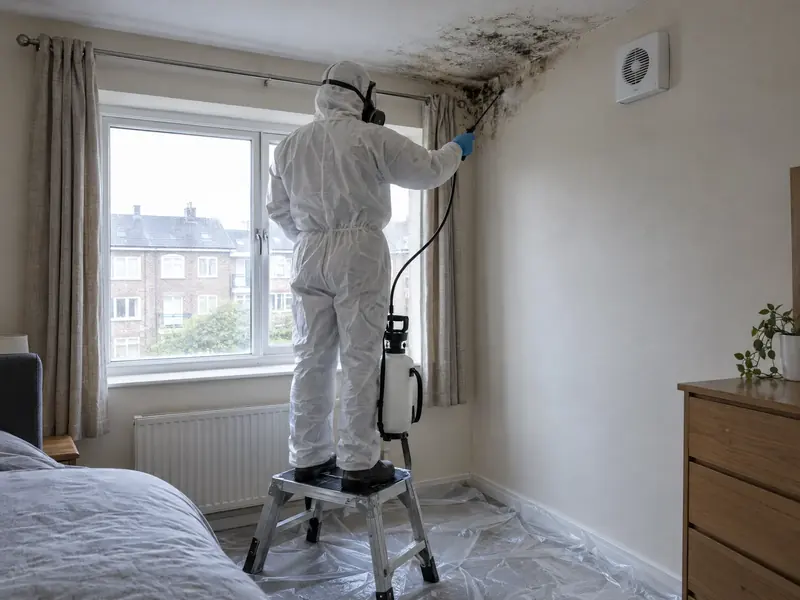
Damp and mould remediation
Mould treatment plus the fix behind it: ventilation, insulation, leaks and cold spots.
Learn more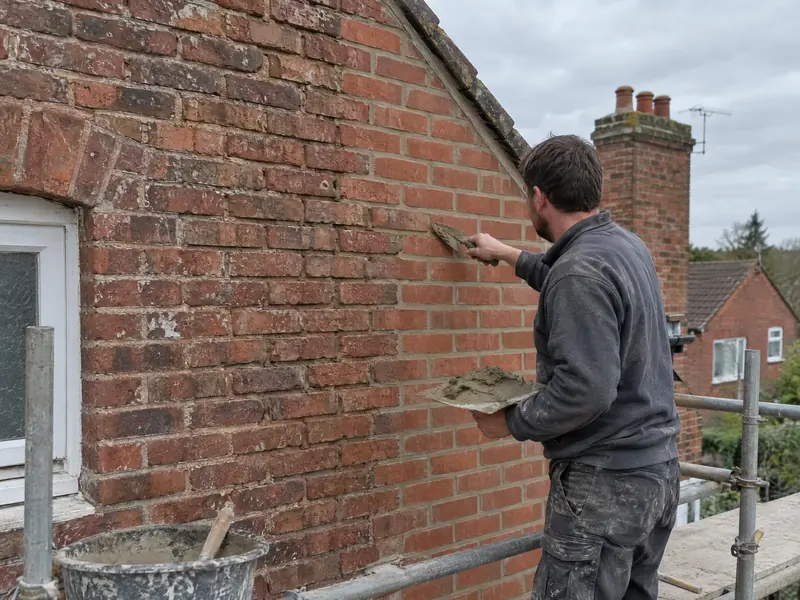
Brickwork, pointing and render repairs
Repointing, brick replacement, render repairs, lintels and cavity tie work on houses and low-rise blocks.
Learn more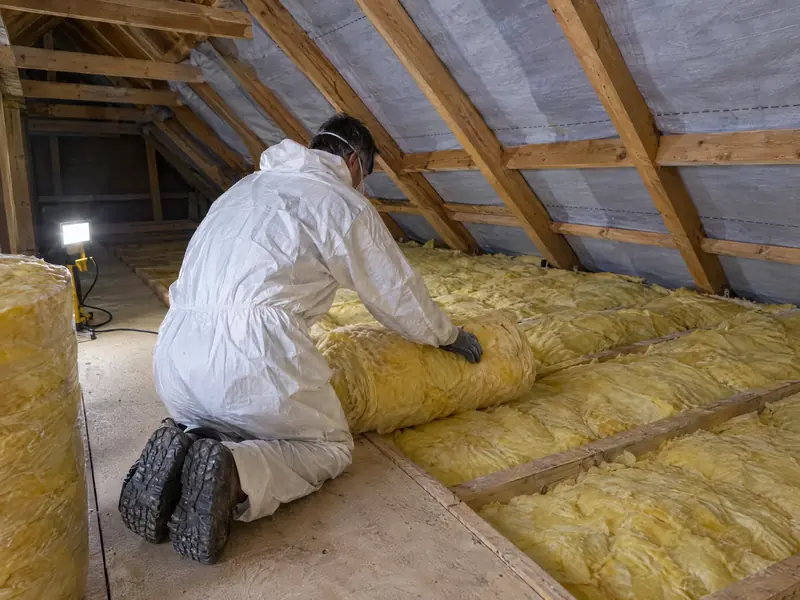
Loft and cavity wall insulation
Loft top-ups, cavity fill and extraction of failed fill, with ventilation checked alongside.
Learn moreFurther reading: Damp and mould: fixing the cause, not the symptom · Housing disrepair claims: the landlord's works route · Stock condition surveys and planned works