
Damp, mould and building fabric
Brickwork, pointing and render repairs for social landlords
Repointing, brick replacement, render repairs, lintels and cavity tie work on houses and low-rise blocks.
External fabric repairs are the brickwork, pointing, render, lintel and wall-tie works that keep the outside of a building weathertight and structurally sound. Failing pointing and cracked render are a common source of penetrating damp, so these repairs often sit alongside damp and mould cases.
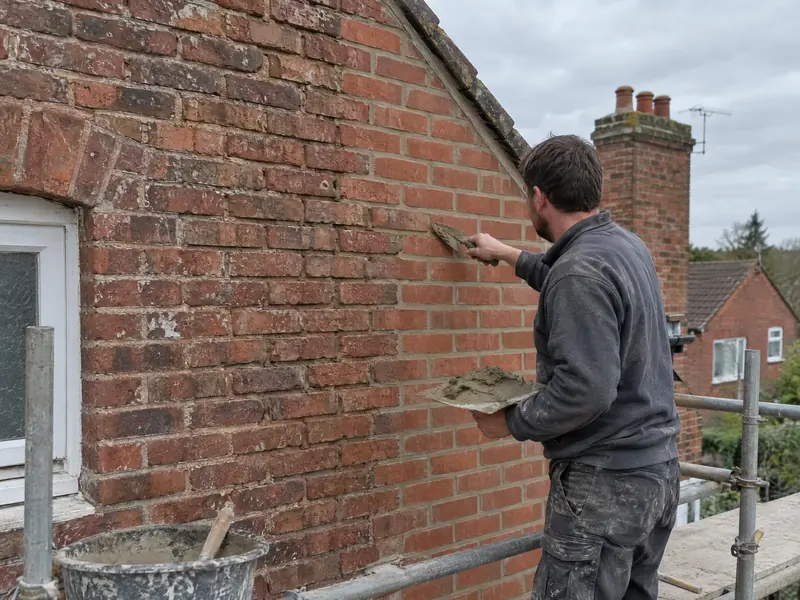
How do we approach brickwork, pointing and render repairs?
We carry out targeted repairs and whole-elevation programmes. Where cracking suggests movement, we recommend a structural engineer's view before we price, rather than filling a crack that will open again.
What is included?
- Raking out and repointing in lime or cement mortars to suit the wall
- Brick and stone replacement and indent repairs
- Render repairs, re-rendering and through-coloured render
- Lintel replacement and cavity wall tie replacement
- Crack stitching and helical bar repairs to an engineer's design
- Damp-proof course and ground level corrections
- Scaffold, access and protection
What do we hand over at the end?
- Defect photographs by elevation
- Specification of mortars and render used
- Engineer's design where relevant
- Completion photographs
Who is this service for?
- Planned teams with elevation repairs in stock condition data
- Damp and mould teams tracing penetrating damp
- Councils with pre-1919 stock
Process
How does each job run?
Inspect
We photograph the elevations, note the defects and check whether any cracking needs an engineer.
Specify
Mortar and render types are chosen to suit the wall. Older solid walls usually need lime-based materials.
Repair
Work proceeds elevation by elevation with protection for residents and their property.
Hand over
Completion photos and a note of anything else seen at height while the scaffold was up.
Rules by nation
Which rules shape brickwork, pointing and render repairs in each UK nation?
The legal duties sit with the landlord. These are the rules that set the timescales and standards we work to, as checked on 31 October 2026.
Social landlords are commercial clients under the Construction (Design and Management) Regulations 2015, so the full client duties apply. Where there is more than one contractor, the client appoints a principal designer and a principal contractor. A project must be notified to HSE if it lasts more than 30 working days with more than 20 workers on site at once, or exceeds 500 person-days.
Social homes in England must meet the Decent Homes Standard, enforced through the Regulator of Social Housing's Safety and Quality Standard. A reformed standard, confirmed in January 2026, must be met by 2035 at the latest.
Decent Homes Standard (England)Social landlords are commercial clients under the Construction (Design and Management) Regulations 2015, so the full client duties apply. Where there is more than one contractor, the client appoints a principal designer and a principal contractor. A project must be notified to HSE if it lasts more than 30 working days with more than 20 workers on site at once, or exceeds 500 person-days.
Social landlords in Wales work to the Welsh Housing Quality Standard 2023, which has applied since 1 April 2024, with all homes to comply by 31 March 2034.
WHQS 2023 (Wales)Social landlords are commercial clients under the Construction (Design and Management) Regulations 2015, so the full client duties apply. Where there is more than one contractor, the client appoints a principal designer and a principal contractor. A project must be notified to HSE if it lasts more than 30 working days with more than 20 workers on site at once, or exceeds 500 person-days.
Social landlords in Scotland must meet the Scottish Housing Quality Standard, with energy efficiency rules (EESSH2) under review ahead of a new Social Housing Net Zero Standard.
SHQS (Scotland)Northern Ireland has its own construction safety rules, the Construction (Design and Management) Regulations (Northern Ireland) 2016, enforced by HSENI. Social landlords carrying out works are commercial clients with duties under them.
In Northern Ireland, the Housing Executive and registered housing associations work to the Northern Ireland Decent Homes Standard, which the Department for Communities consulted on revising in 2025–26.
Decent Homes Standard (NI)Guide prices
What do brickwork, pointing and render repairs cost?
Rounded planning figures with their sources and VAT basis. Your price depends on the survey, your specification and the region. Use our programme budget tool for a regional estimate.
| Item | Unit | Guide range | Basis |
|---|---|---|---|
| Repointing and brickwork repairs | per elevation | Priced after survey | Priced after survey: Wall area, mortar type and access vary too much for a meaningful range. VAT basis: –. |
Prices checked 31 October 2026. See all guide prices and regional factors.
Questions
Brickwork, pointing and render repairs: common questions
Do you use lime mortar?
Where the wall needs it, yes, usually on older solid walls. Hard cement pointing on soft brick can trap moisture and damage the brick face.
Can you deal with structural cracking?
We carry out crack repairs to an engineer's design. If cracking suggests movement, we recommend an engineer before any work is priced.
Will repointing cure damp?
It can, where failed pointing is letting rain in. We check for other causes as well, such as gutters, ground levels and bridged damp-proof courses.
Can you combine this with other scaffold work?
Yes. Fabric repairs are often programmed with roofing or external decoration to share access costs.
Related
Which services often go with brickwork, pointing and render repairs?
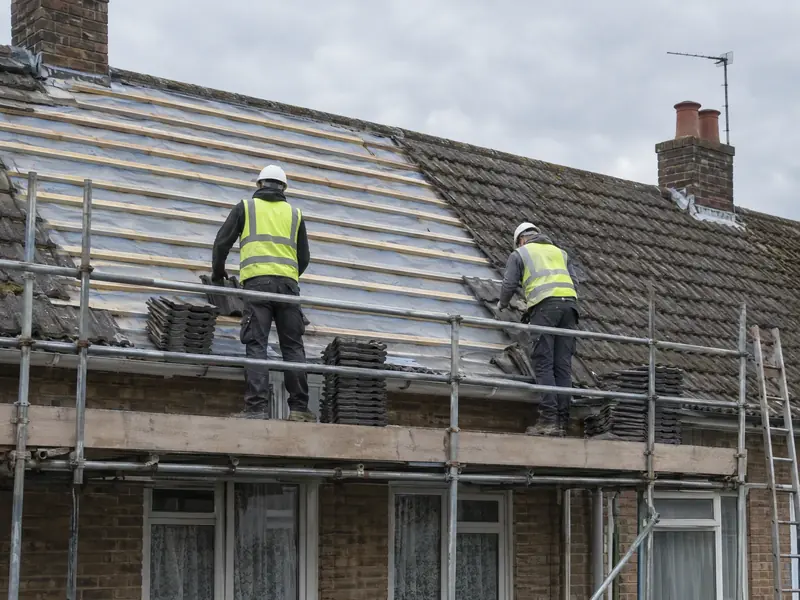
Roofing and rainwater goods
Roof repairs and renewals, fascias, soffits, gutters and downpipes on houses and low-rise blocks.
Learn more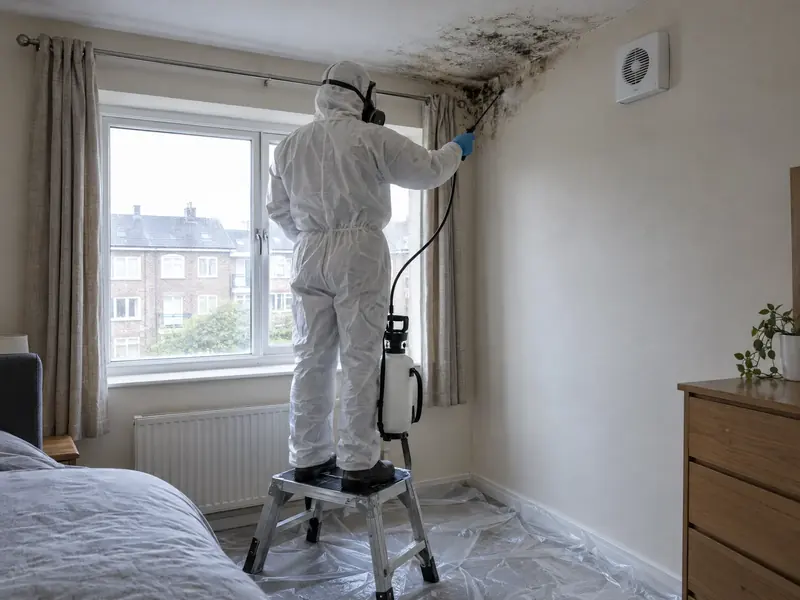
Damp and mould remediation
Mould treatment plus the fix behind it: ventilation, insulation, leaks and cold spots.
Learn more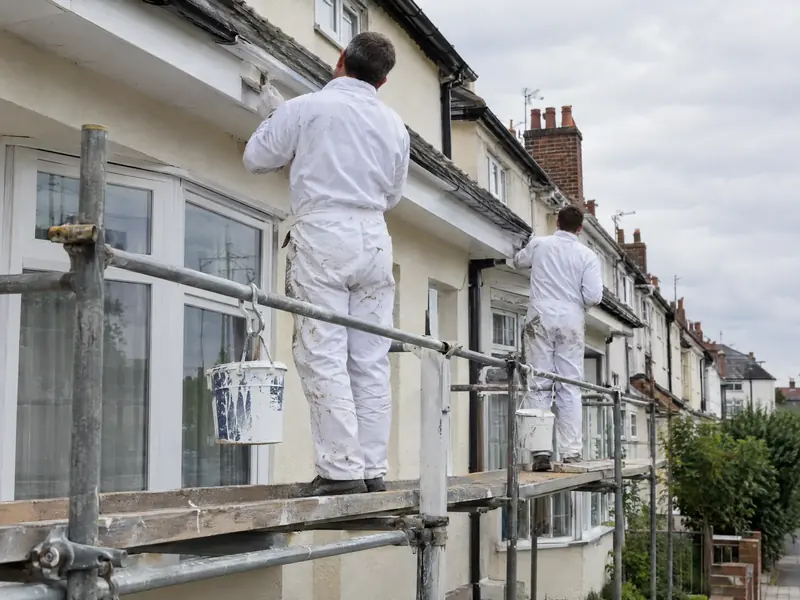
Cyclical and external decoration
External painting and repairs on a cycle, protecting timber, render and metalwork before they fail.
Learn moreFurther reading: Damp and mould: fixing the cause, not the symptom