
Damp, mould and building fabric
Damp and mould remediation for social landlords
Mould treatment plus the fix behind it: ventilation, insulation, leaks and cold spots.
Damp and mould remediation means treating mould safely and then fixing what caused it, whether that is condensation from poor ventilation, a cold spot in the structure, a leak or penetrating or rising damp. Washing mould off without fixing the cause rarely lasts.
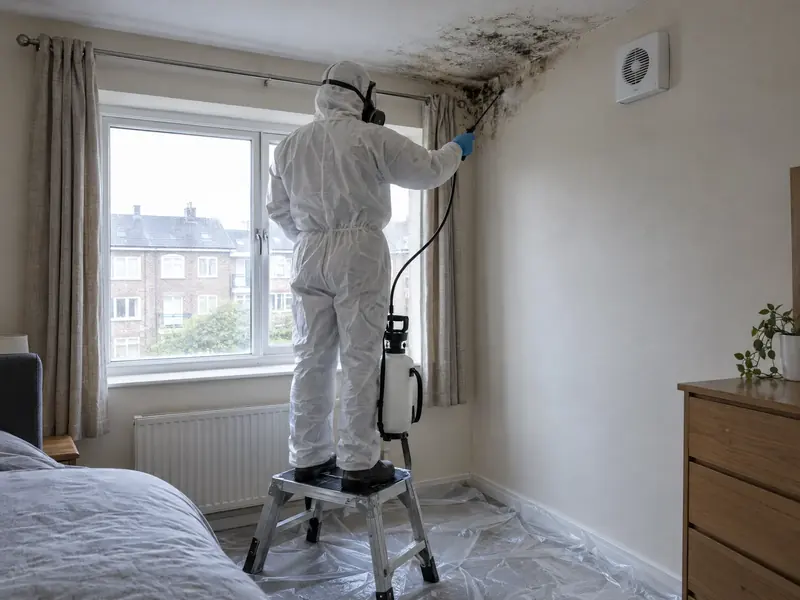
How do we approach damp and mould remediation?
We start with a diagnosis: where the moisture comes from and why it is condensing or soaking into the fabric. Then we treat the mould and fix the cause, and where it helps we fit humidity monitoring so you can see whether the fix has worked. In England, social landlords' timescales for damp and mould hazards are set by Awaab's Law, and we work to the dates you give us.
What is included?
- Damp and mould inspection with moisture readings and photos
- Mould wash, fungicidal treatment and anti-mould redecoration
- Humidity-controlled extract fans and continuous extract (dMEV)
- Positive input ventilation (PIV) units
- Trickle vents, door undercuts and window repairs
- Leak repairs to roofs, gutters, pipes and seals
- Insulation of cold spots and thermal bridges
- Humidity and temperature sensors for follow-up monitoring
What do we hand over at the end?
- Moisture and humidity readings
- Before and after photographs
- Description of the cause found and the fix carried out
- Follow-up check results
Who is this service for?
- Housing associations working to Awaab's Law timescales
- Councils with damp and mould caseloads
- Disrepair and complaints teams
Process
How does each job run?
Inspect and diagnose
We take moisture and humidity readings, photograph the affected areas and identify the most likely causes.
Make safe
Mould is treated as a priority where it is affecting health, with the room left usable.
Fix the cause
Ventilation, leaks, insulation or damp-proofing works, priced and agreed with you.
Check it worked
A return visit or sensor data after the works confirms whether conditions have improved.
Rules by nation
Which rules shape damp and mould remediation in each UK nation?
The legal duties sit with the landlord. These are the rules that set the timescales and standards we work to, as checked on 31 October 2026.
Awaab's Law (the Hazards in Social Housing (Prescribed Requirements) (England) Regulations 2025) has applied to social landlords since 27 October 2025. Emergency hazards must be investigated and made safe within 24 hours. Significant damp and mould hazards must be investigated within 10 working days, with safety work within 5 working days of the investigation. Phase 2, approved by Parliament in October 2026, extends the rules from 30 November 2026 to hazards including excess cold and heat, falls, fire, electrical hazards and hygiene.
The government's September 2023 guidance, Damp and mould: understanding and addressing the health risks for rented housing providers, tells landlords to look for and fix the underlying causes, such as ventilation, insulation, heating and repair, rather than putting damp and mould down to tenants' lifestyles. The reformed Decent Homes Standard adds a new criterion that homes must be free from damp and mould.
Social homes in England must meet the Decent Homes Standard, enforced through the Regulator of Social Housing's Safety and Quality Standard. A reformed standard, confirmed in January 2026, must be met by 2035 at the latest.
Decent Homes Standard (England)Awaab's Law applies in England only, and we found no Welsh equivalent when we checked in October 2026. In Wales, the Renting Homes fitness rules list damp and mould among the matters that can make a home unfit, and WHQS 2023 requires homes to be free from damp.
WHQS 2023 requires homes to be free from damp, and damp and mould are among the fitness for human habitation matters under the Renting Homes (Wales) rules.
Social landlords in Wales work to the Welsh Housing Quality Standard 2023, which has applied since 1 April 2024, with all homes to comply by 31 March 2034.
WHQS 2023 (Wales)Scotland has its own rules: the Investigation and Commencement of Repair (Scotland) Regulations 2026 have applied since 6 October 2026. Reported damp or mould must be investigated within 10 working days, the tenant given a written summary within 3 working days, and repairs started within 5 working days.
Substantial damp and mould is now a qualifying repair for Scottish secure tenants, with 20 working days to complete once the investigation is done.
Social landlords in Scotland must meet the Scottish Housing Quality Standard, with energy efficiency rules (EESSH2) under review ahead of a new Social Housing Net Zero Standard.
SHQS (Scotland)Awaab's Law applies in England only, and we found no Northern Ireland equivalent when we checked in October 2026. Landlords' repair obligations and the Northern Ireland Decent Homes Standard still apply.
Damp and mould is dealt with under landlords' repair obligations and the Decent Homes Standard. The Department for Communities consulted in 2025–26 on a revised standard that includes a repair-timescale baseline.
In Northern Ireland, the Housing Executive and registered housing associations work to the Northern Ireland Decent Homes Standard, which the Department for Communities consulted on revising in 2025–26.
Decent Homes Standard (NI)Guide prices
What does damp and mould remediation cost?
Rounded planning figures with their sources and VAT basis. Your price depends on the survey, your specification and the region. Use our programme budget tool for a regional estimate.
| Item | Unit | Guide range | Basis |
|---|---|---|---|
| Damp and mould: typical case (1–2 rooms, mould treatment, extract fan) | per home | £450–£1,150 | Derived from published totals: Mould treatment £200–£400 per room and a new extractor fan at £250–£350 (Checkatrade, 2024–26). The Awaab's Law impact assessment uses an average of £985 per home for Category 1 damp and mould remediation (BRE 2023 data). VAT basis: ex VAT. |
| Damp and mould: severe case (whole-home treatment, PIV, fans) | per home | £2,000–£5,500 | Derived from published totals: Whole-house mould treatment £700–£3,000 and PIV units at £763–£1,750 (Checkatrade, 2024). VAT basis: ex VAT. |
Prices checked 31 October 2026. See all guide prices and regional factors.
Questions
Damp and mould remediation: common questions
Do you just treat the mould?
We treat it, but we also find and fix the cause. Mould that is washed off without dealing with ventilation, cold spots or leaks usually returns within weeks.
Can you meet Awaab's Law timescales?
The legal duty sits with the landlord. We work to the dates you give us for investigation, making safe and repair, and we tell you as soon as we know if access or materials put a date at risk.
Is condensation the tenant's fault?
Rarely on its own. National guidance on damp and mould tells landlords to look at the building first: ventilation, insulation, heating and repair. We approach every case on that basis.
Do you fit PIV and extract fans?
Yes, including humidity-controlled extract fans and positive input ventilation units, chosen to suit the property.
Can you monitor homes after the work?
Yes. Small humidity and temperature sensors can show whether a fix has worked, which is useful evidence if a complaint returns.
Related
Which services often go with damp and mould remediation?
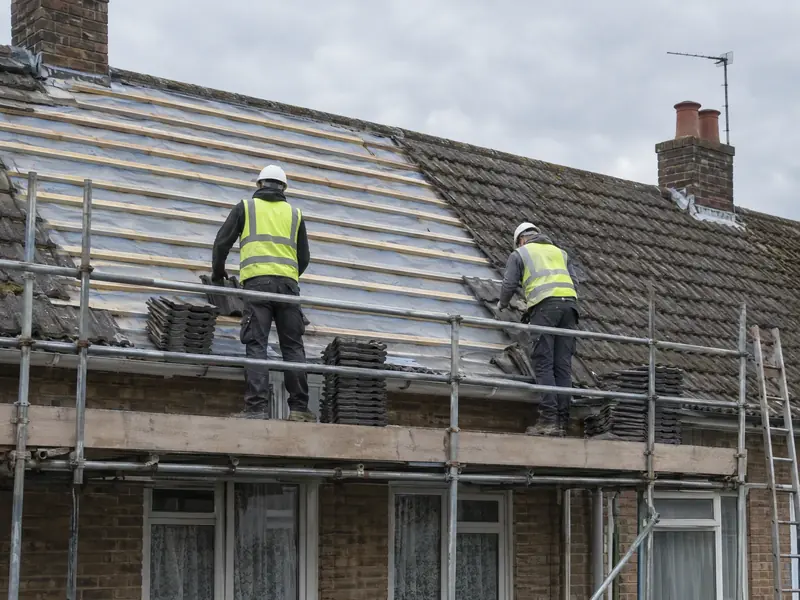
Roofing and rainwater goods
Roof repairs and renewals, fascias, soffits, gutters and downpipes on houses and low-rise blocks.
Learn more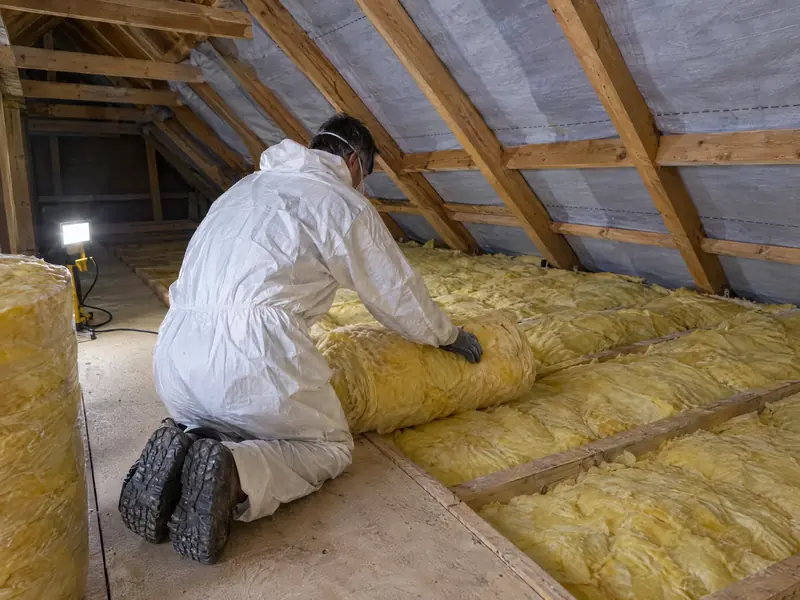
Loft and cavity wall insulation
Loft top-ups, cavity fill and extraction of failed fill, with ventilation checked alongside.
Learn more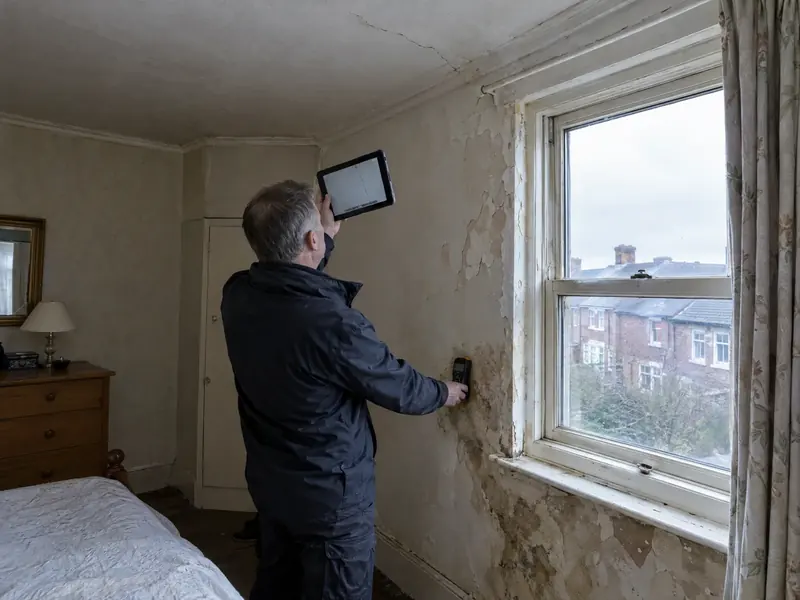
Housing disrepair works
Remedial works on homes subject to a disrepair complaint or claim, scheduled and evidenced.
Learn moreFurther reading: Awaab's Law explained for social landlords · Damp and mould: fixing the cause, not the symptom · Housing disrepair claims: the landlord's works route