
Retrofit and energy
Loft and cavity wall insulation for social landlords
Loft top-ups, cavity fill and extraction of failed fill, with ventilation checked alongside.
Loft insulation and cavity wall insulation are the lowest-cost fabric measures for most social homes. Loft insulation is laid between and over the ceiling joists; cavity wall insulation is injected into the gap between the two leaves of a masonry wall. Both need a survey first, because unsuitable walls and blocked loft ventilation cause damp.
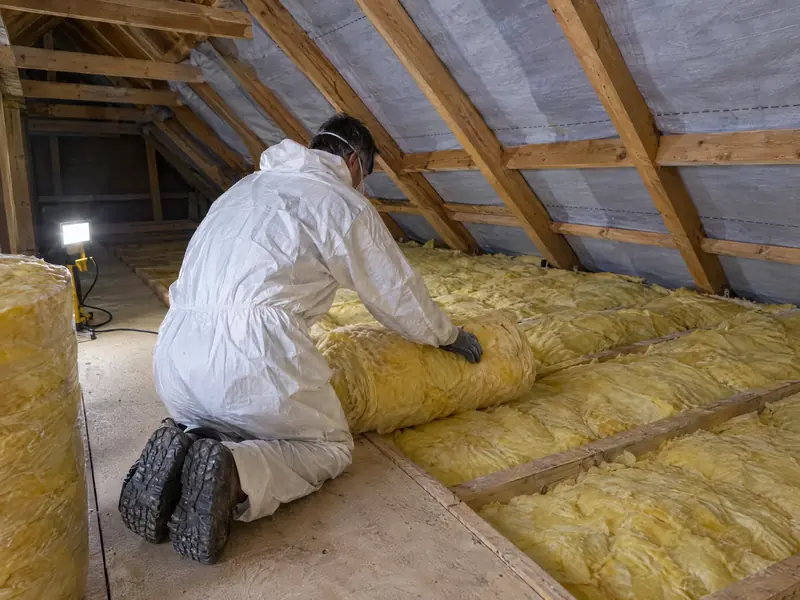
How do we approach loft and cavity wall insulation?
We survey each home before installing: cavity width, exposure, wall condition and existing fill, and loft ventilation and access. Where failed or unsuitable cavity fill is causing damp, we can extract it and reinstate the wall.
What is included?
- Cavity suitability survey, including borescope inspection
- Cavity wall insulation injection
- Extraction of failed or unsuitable cavity fill
- Loft insulation top-ups to current recommended depths
- Boarded walkways, hatch insulation and draught-proofing
- Loft ventilation checks and remedial vents
- Pipe and tank insulation
What do we hand over at the end?
- Suitability survey
- Borescope images where taken
- Before and after loft photos
- Guarantee documents
Who is this service for?
- Landlords topping up homes below current recommended depths
- Damp teams dealing with failed cavity fill
- Retrofit programmes
Process
How does each job run?
Survey
Walls and lofts are checked for suitability, ventilation and access.
Prepare
Lofts are cleared of obstructions with the resident's agreement and walls are checked for open vents and bridging.
Install
Fill is injected or quilt is laid, with ventilation maintained.
Hand over
Photos, guarantees where issued, and data for funding schemes.
Rules by nation
Which rules shape loft and cavity wall insulation in each UK nation?
The legal duties sit with the landlord. These are the rules that set the timescales and standards we work to, as checked on 31 October 2026.
Warm Homes: Social Housing Fund Wave 3 (£1.29bn for 2025–2028, plus up to £295m more for 2026/27) requires delivery under PAS 2035/2030, TrustMark-registered installers and, for heat pumps and solar, MCS certification. The fund is closed to new applications. Separately, social rented homes must reach EPC C on one reformed EPC metric by 1 April 2030.
PAS 2035:2023 sets the whole-house retrofit process (assessment, coordination, design, installation and evaluation), and PAS 2030:2023 covers installation. Most government-backed retrofit schemes require both, with TrustMark lodgement. We confirm in writing, before appointment, how each measure in your scope will meet those requirements.
Decent Homes Standard (England)WHQS 2023 asks Welsh social landlords to set a Target Energy Pathway for their homes by 31 March 2027, informed by a whole stock assessment.
PAS 2035:2023 sets the whole-house retrofit process (assessment, coordination, design, installation and evaluation), and PAS 2030:2023 covers installation. Most government-backed retrofit schemes require both, with TrustMark lodgement. We confirm in writing, before appointment, how each measure in your scope will meet those requirements.
WHQS 2023 (Wales)Scottish social landlords work to EESSH2, which is under review. Interim guidance was issued in March 2026, and decisions on a Social Housing Net Zero Standard are expected by spring 2027.
PAS 2035:2023 sets the whole-house retrofit process (assessment, coordination, design, installation and evaluation), and PAS 2030:2023 covers installation. Most government-backed retrofit schemes require both, with TrustMark lodgement. We confirm in writing, before appointment, how each measure in your scope will meet those requirements.
SHQS (Scotland)Retrofit funding in Northern Ireland is set by the Department for Communities and the Housing Executive's own programmes.
PAS 2035:2023 sets the whole-house retrofit process (assessment, coordination, design, installation and evaluation), and PAS 2030:2023 covers installation. Most government-backed retrofit schemes require both, with TrustMark lodgement. We confirm in writing, before appointment, how each measure in your scope will meet those requirements.
Decent Homes Standard (NI)Guide prices
What does loft and cavity wall insulation cost?
Rounded planning figures with their sources and VAT basis. Your price depends on the survey, your specification and the region. Use our programme budget tool for a regional estimate.
| Item | Unit | Guide range | Basis |
|---|---|---|---|
| Cavity wall insulation | per home | £950–£2,700 | Published figure: Consumer guide: flat £950 to semi £2,700 (Checkatrade, November 2024); SHDF planned spend £1,505. VAT basis: 0% (energy-saving materials). |
| Loft insulation top-up | per home | £650–£1,200 | Published figure: Consumer guide £654–£1,206 (Checkatrade, March 2025); SHDF planned spend £878. VAT basis: ex VAT. |
Prices checked 31 October 2026. See all guide prices and regional factors.
Questions
Loft and cavity wall insulation: common questions
Is every cavity wall suitable for fill?
No. Exposure to driving rain, narrow or obstructed cavities and poor wall condition can make fill unsuitable. That is why we survey first.
Can you remove failed cavity insulation?
Yes. Extraction is common where old fill has become wet and is bridging damp to the inner wall.
How deep should loft insulation be?
Current guidance for most lofts is around 270mm of mineral wool, or equivalent, but your specification and funding scheme set the target.
Will loft insulation cause condensation?
Not if the loft remains ventilated. We check eaves and ridge ventilation before laying insulation.
Related
Which services often go with loft and cavity wall insulation?
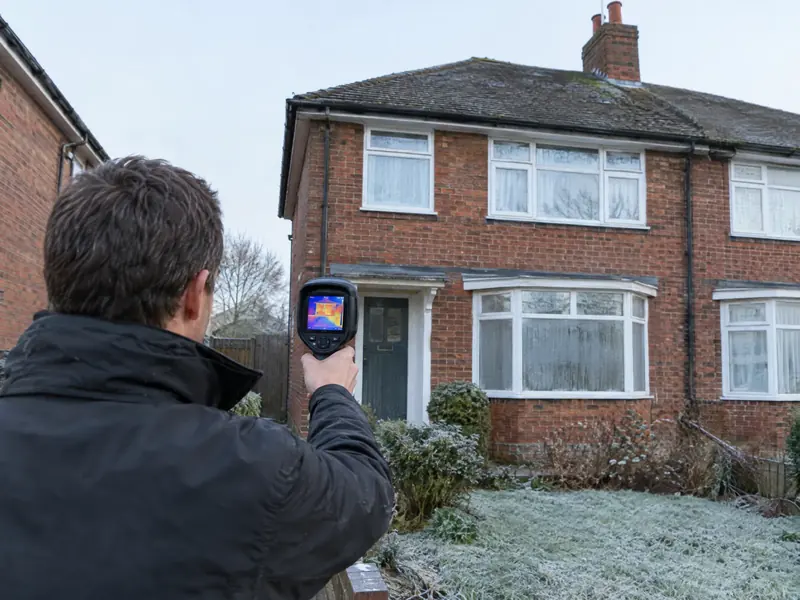
Whole-house retrofit
Fabric-first upgrades planned as a whole: insulation, ventilation, heating and windows in the right order.
Learn more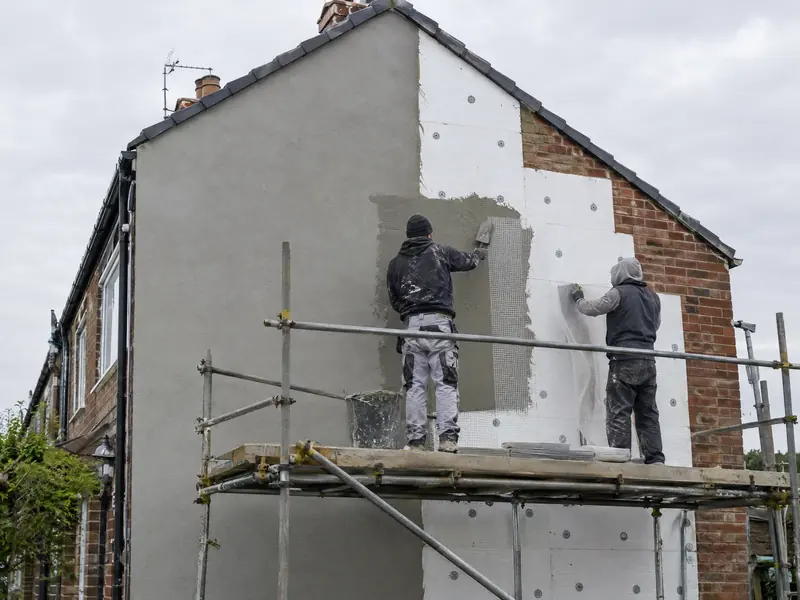
External wall insulation
Insulation boards and render systems on solid-wall and hard-to-treat homes, with detailing done properly.
Learn more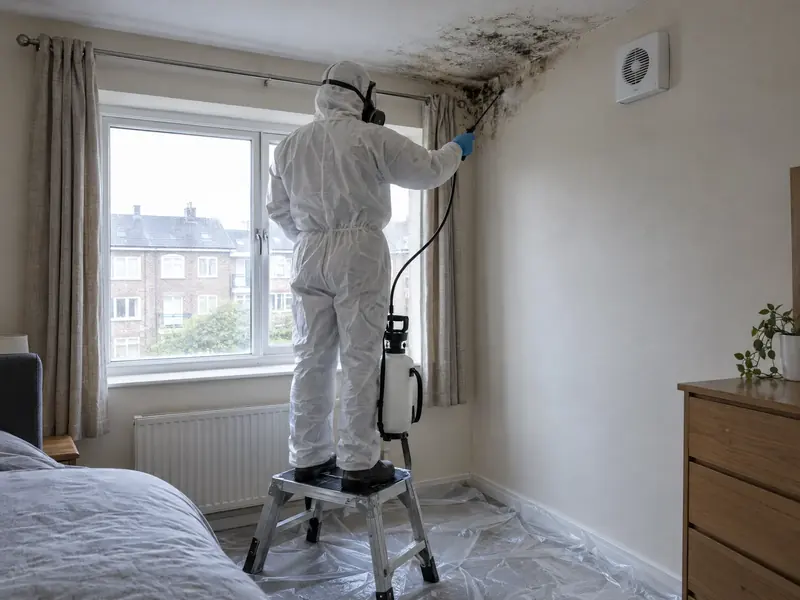
Damp and mould remediation
Mould treatment plus the fix behind it: ventilation, insulation, leaks and cold spots.
Learn moreFurther reading: Damp and mould: fixing the cause, not the symptom · Warm Homes: Social Housing Fund and EPC C