
Planned and capital works
Planned maintenance and Decent Homes works for social landlords
Programmes driven by stock condition data: components renewed before they fail, homes brought up to standard.
Planned maintenance is the programmed renewal of building components (roofs, windows, kitchens, bathrooms, heating, electrics) before they fail, based on stock condition data. In social housing it is how landlords keep homes at the standard that applies in their nation, such as the Decent Homes Standard in England or the Welsh Housing Quality Standard.
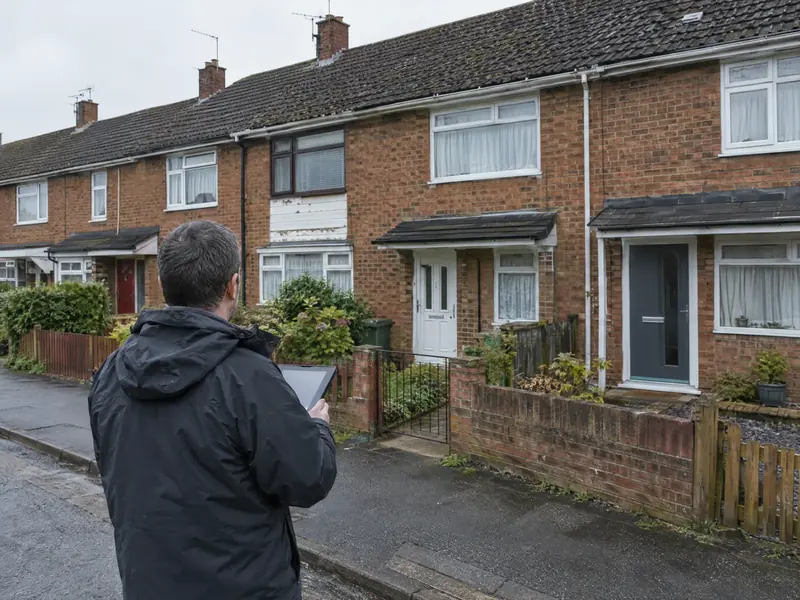
How do we approach planned maintenance works?
We can take a programme from your stock condition data and deliver it as a multi-trade package, or carry out a single component stream. Where your data is out of date, we can survey the homes in the programme first so the scope matches what is really there.
What is included?
- Validation surveys of homes in the programme
- Multi-trade packages: kitchens, bathrooms, windows, doors, roofs, electrics
- Single-component programmes where you prefer separate streams
- Resident liaison and choice management
- Programme reporting: starts, completions, variations and spend
- Updated component data returned for your asset system
- Coordination with your compliance contractors
What do we hand over at the end?
- Programme tracker with starts and completions
- Variation log
- Component data for your asset register
- Certificates and photos per home
Who is this service for?
- Asset and investment teams
- Councils working through a Housing Revenue Account programme
- Housing associations preparing for a new housing quality standard
Process
How does each job run?
Data review
We review the homes and components in your programme and flag anything that looks inconsistent.
Validation survey
Where needed, we survey before ordering, so the scope matches the home.
Delivery
Work is programmed street by street, with resident liaison and a weekly report.
Data return
Component data, certificates and photos are returned in a format your asset system can take.
Rules by nation
Which rules shape planned maintenance works in each UK nation?
The legal duties sit with the landlord. These are the rules that set the timescales and standards we work to, as checked on 31 October 2026.
Social homes in England must meet the Decent Homes Standard, enforced through the Regulator of Social Housing's Safety and Quality Standard. A reformed standard, confirmed in January 2026, must be met by 2035 at the latest.
Since April 2024 the Regulator of Social Housing has inspected landlords with more than 1,000 homes against its consumer standards, on at least a four-year cycle. The Safety and Quality Standard expects an accurate, up-to-date and evidenced understanding of the condition of every home, based on physical assessment.
Social landlords are commercial clients under the Construction (Design and Management) Regulations 2015, so the full client duties apply. Where there is more than one contractor, the client appoints a principal designer and a principal contractor. A project must be notified to HSE if it lasts more than 30 working days with more than 20 workers on site at once, or exceeds 500 person-days.
Decent Homes Standard (England)Social landlords in Wales work to the Welsh Housing Quality Standard 2023, which has applied since 1 April 2024, with all homes to comply by 31 March 2034.
Registered social landlords in Wales are regulated by the Welsh Government, and WHQS 2023 required a stock assessment and compliance policy by 31 March 2025.
Social landlords are commercial clients under the Construction (Design and Management) Regulations 2015, so the full client duties apply. Where there is more than one contractor, the client appoints a principal designer and a principal contractor. A project must be notified to HSE if it lasts more than 30 working days with more than 20 workers on site at once, or exceeds 500 person-days.
WHQS 2023 (Wales)Social landlords in Scotland must meet the Scottish Housing Quality Standard, with energy efficiency rules (EESSH2) under review ahead of a new Social Housing Net Zero Standard.
Landlords report to the Scottish Housing Regulator each year through the Annual Return on the Charter and an Annual Assurance Statement.
Social landlords are commercial clients under the Construction (Design and Management) Regulations 2015, so the full client duties apply. Where there is more than one contractor, the client appoints a principal designer and a principal contractor. A project must be notified to HSE if it lasts more than 30 working days with more than 20 workers on site at once, or exceeds 500 person-days.
SHQS (Scotland)In Northern Ireland, the Housing Executive and registered housing associations work to the Northern Ireland Decent Homes Standard, which the Department for Communities consulted on revising in 2025–26.
Housing associations are regulated by the Department for Communities, which also oversees the Housing Executive.
Northern Ireland has its own construction safety rules, the Construction (Design and Management) Regulations (Northern Ireland) 2016, enforced by HSENI. Social landlords carrying out works are commercial clients with duties under them.
Decent Homes Standard (NI)Guide prices
What do planned maintenance works cost?
Rounded planning figures with their sources and VAT basis. Your price depends on the survey, your specification and the region. Use our programme budget tool for a regional estimate.
| Item | Unit | Guide range | Basis |
|---|---|---|---|
| Kitchen replacement in a programme | per kitchen | £5,000–£10,000 | Derived from published totals: Harrow Council 2024–26 programme (about £6,000 per kitchen or bathroom, derived); consumer guide range from £5,250 (Checkatrade, March 2026). VAT basis: not stated. |
| Bathroom replacement in a programme | per bathroom | £5,500–£8,000 | Published figure: Consumer guide average £7,000 (Checkatrade, March 2026); Harrow programme blended average about £6,000. VAT basis: not stated. |
| Window replacement (uPVC) | per home | £4,500–£12,000 | Published figure: SHDF Wave 1 planned spend £4,461 per home for double glazing (DESNZ evaluation, December 2024); consumer guide £8,000–£15,000 for a 3-bed house (Checkatrade, May 2026). VAT basis: not stated. |
| Full rewire (2–3 bed) | per home | £3,800–£8,000 | Published figure: Consumer guide: 1-bed flat £3,900 to 3-bed house £6,225 (Checkatrade, March 2023); upper end allows for price rises and making good. VAT basis: ex VAT. |
Prices checked 31 October 2026. See all guide prices and regional factors.
Questions
Planned maintenance and Decent Homes works: common questions
Can you work from our stock condition data?
Yes. We price from your data and, where it is old or incomplete, recommend validation surveys before ordering.
Do you return data to our asset system?
Yes. We can return component data, renewal dates and photos in the format your system uses.
Can you deliver several components in one visit?
Yes. Combining components in one programme, such as kitchen, bathroom and rewire, reduces disruption for residents and cost for you.
How do you report progress?
A weekly tracker of starts, completions, variations and spend, plus exceptions as they arise.
Related
Which services often go with planned maintenance works?
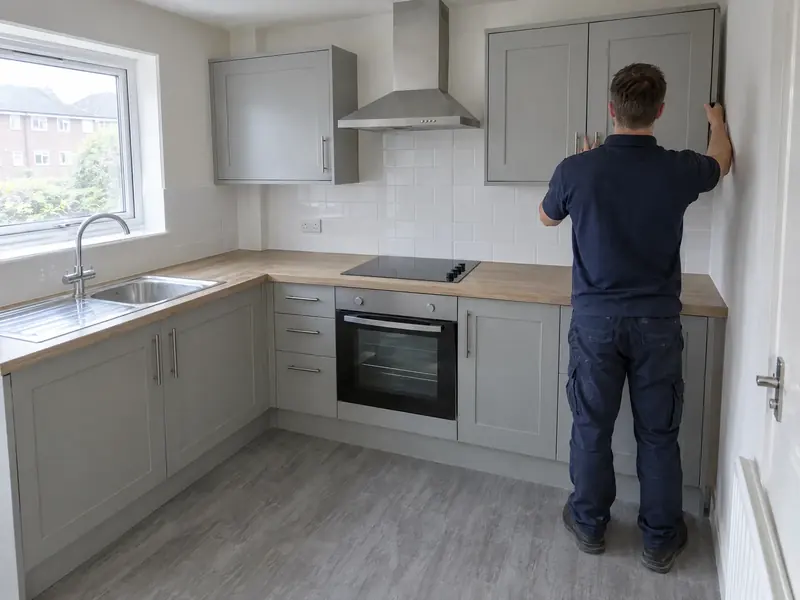
Kitchen replacement programmes
Kitchens replaced to your specification in occupied homes, planned so each kitchen is out of use for as short a time as possible.
Learn more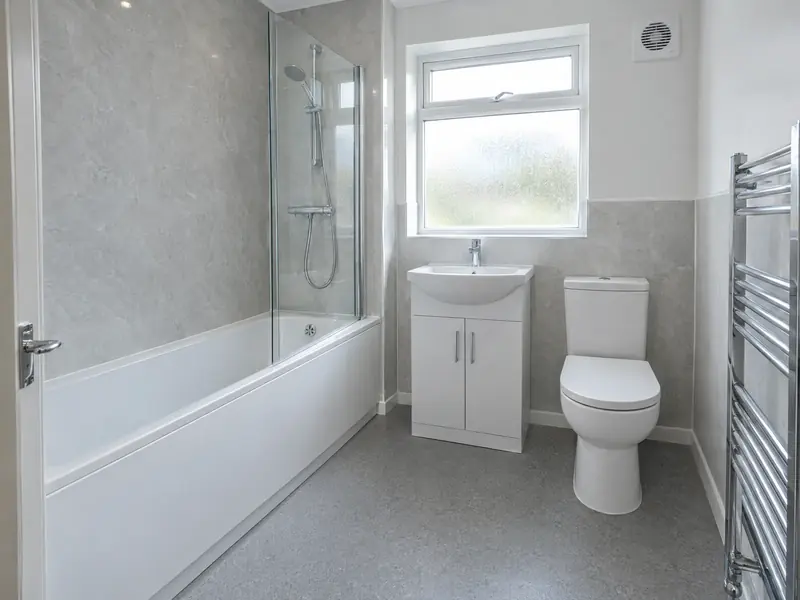
Bathroom replacement programmes
Bathrooms renewed in occupied homes, with extract ventilation, wet-wall panels and level-access options.
Learn more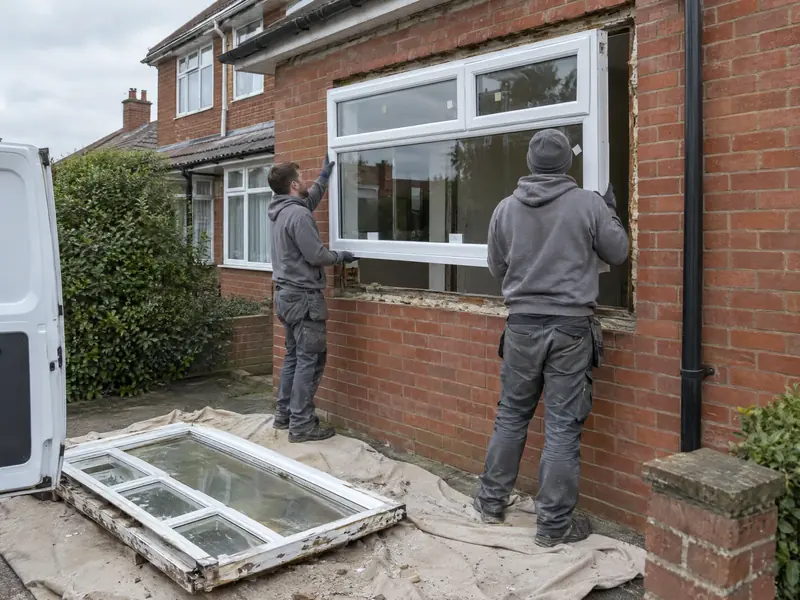
Window and door replacement
Replacement windows and entrance doors fitted to programme, with trickle vents and security hardware to your specification.
Learn moreFurther reading: The Decent Homes Standard: today and 2035 · Tenant Satisfaction Measures and repairs data · Procurement Act 2023 for social housing works