
Planned and capital works
Bathroom replacement programmes for social landlords
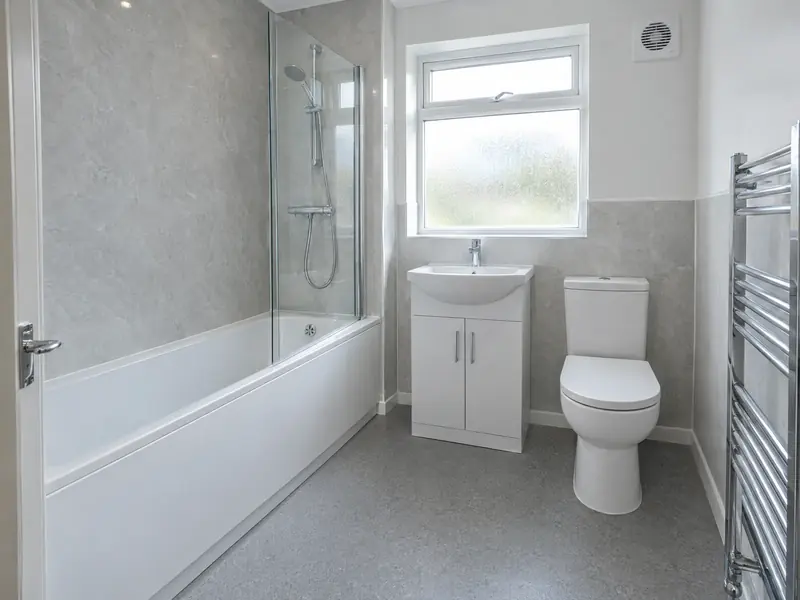
Bathrooms renewed in occupied homes, with extract ventilation, wet-wall panels and level-access options.
A bathroom replacement programme renews bathrooms across a group of social homes: suite, shower, wall finishes, flooring, extract ventilation and any electrical work. Programmes often include adaptations, such as level-access showers, for residents who need them.
How do we approach bathroom replacement?
We survey each bathroom, agree the specification with you and the finishes with the resident, and keep the home usable throughout: most landlords ask for a working toilet every night, and we plan to that.
What is included?
- Survey, layout and resident choice within your specification
- Strip-out, asbestos checks and waste removal
- Baths, showers, basins and WCs, including thermostatic showers
- Wet-wall panelling or tiling and slip-resistant flooring
- Humidity-controlled extract fans
- Electrical work in special locations, certified and notified where required
- Level-access shower conversions where assessed
What do we hand over at the end?
- Survey and resident choices
- Electrical certificates
- Completion photos
- Resident sign-off
Who is this service for?
- Planned teams with bathrooms due for renewal
- Councils and HAs combining renewals with adaptations
- Retrofit and damp programmes adding extract ventilation
Process
How does each job run?
Survey
Measurements, condition of floor and walls, ventilation and the resident's needs.
Programme
Dates confirmed in writing, with a working toilet maintained every night.
Installation
Strip-out, first fix, boarding, suite, finishes and second fix in sequence.
Handover
Certificates, photos and a resident walk-round.
Rules by nation
Which rules shape bathroom replacement in each UK nation?
The legal duties sit with the landlord. These are the rules that set the timescales and standards we work to, as checked on 31 October 2026.
In England, new circuits, consumer unit replacements and alterations in bathrooms near baths and showers are notifiable under Part P of the Building Regulations. Notification is made by a competent person scheme installer or through building control.
Under the Control of Asbestos Regulations 2012, the presence of asbestos must be assessed (or presumed) before work that could disturb it, and a refurbishment and demolition survey is needed before intrusive work in buildings built or refurbished before 2000. Licensed asbestos work is carried out only by licensed contractors.
Social homes in England must meet the Decent Homes Standard, enforced through the Regulator of Social Housing's Safety and Quality Standard. A reformed standard, confirmed in January 2026, must be met by 2035 at the latest.
Decent Homes Standard (England)Wales has its own Building Regulations, including its own Part P on electrical safety. Notifiable work is certified and notified under the Welsh rules.
Under the Control of Asbestos Regulations 2012, the presence of asbestos must be assessed (or presumed) before work that could disturb it, and a refurbishment and demolition survey is needed before intrusive work in buildings built or refurbished before 2000. Licensed asbestos work is carried out only by licensed contractors.
Social landlords in Wales work to the Welsh Housing Quality Standard 2023, which has applied since 1 April 2024, with all homes to comply by 31 March 2034.
WHQS 2023 (Wales)In Scotland, electrical work must meet the building standards and BS 7671. We confirm for your project whether a building warrant is needed.
Under the Control of Asbestos Regulations 2012, the presence of asbestos must be assessed (or presumed) before work that could disturb it, and a refurbishment and demolition survey is needed before intrusive work in buildings built or refurbished before 2000. Licensed asbestos work is carried out only by licensed contractors.
Social landlords in Scotland must meet the Scottish Housing Quality Standard, with energy efficiency rules (EESSH2) under review ahead of a new Social Housing Net Zero Standard.
SHQS (Scotland)Electrical work must meet BS 7671 and the building regulations that apply in Northern Ireland, confirmed for your project before appointment.
Northern Ireland has its own asbestos regulations, the Control of Asbestos Regulations (Northern Ireland) 2012, enforced by HSENI. Asbestos information is checked before intrusive work, and licensed work is carried out only by licensed contractors.
In Northern Ireland, the Housing Executive and registered housing associations work to the Northern Ireland Decent Homes Standard, which the Department for Communities consulted on revising in 2025–26.
Decent Homes Standard (NI)Guide prices
What does bathroom replacement cost?
Rounded planning figures with their sources and VAT basis. Your price depends on the survey, your specification and the region. Use our programme budget tool for a regional estimate.
| Item | Unit | Guide range | Basis |
|---|---|---|---|
| Bathroom replacement in a programme | per bathroom | £5,500–£8,000 | Published figure: Consumer guide average £7,000 (Checkatrade, March 2026); Harrow programme blended average about £6,000. VAT basis: not stated. |
| Level-access shower / wet room conversion | per home | £4,750–£6,500 | Published figure: Independent Review of the Disabled Facilities Grant (England average £4,755, 2016/17); Habinteg (2024: £6,500+ in an older home). VAT basis: not stated (relief may apply). |
Prices checked 31 October 2026. See all guide prices and regional factors.
Questions
Bathroom replacement programmes: common questions
Will the resident have a toilet throughout?
We plan to keep a working toilet available every night. Where that is not possible, temporary facilities are agreed with you in advance.
Do you fit extract fans as standard?
We recommend humidity-controlled extract in every bathroom we renew. It is one of the simplest ways to prevent mould.
Can you include level-access showers?
Yes, where an occupational therapist or your adaptations policy recommends one.
Is electrical work in bathrooms notifiable?
In England and Wales, some electrical work in bathrooms is notifiable under the Building Regulations. It is certified and notified accordingly.
Related
Which services often go with bathroom replacement?
Kitchen replacement programmes
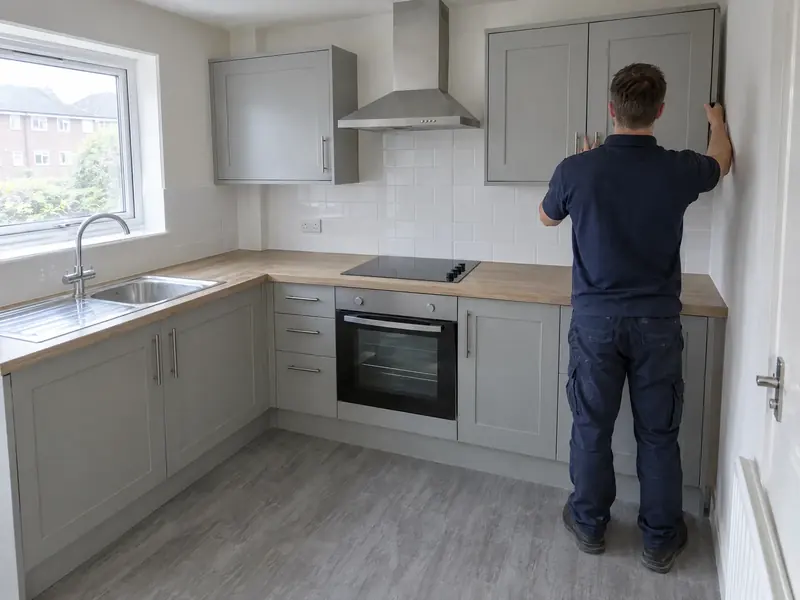
Kitchens replaced to your specification in occupied homes, planned so each kitchen is out of use for as short a time as possible.
Learn more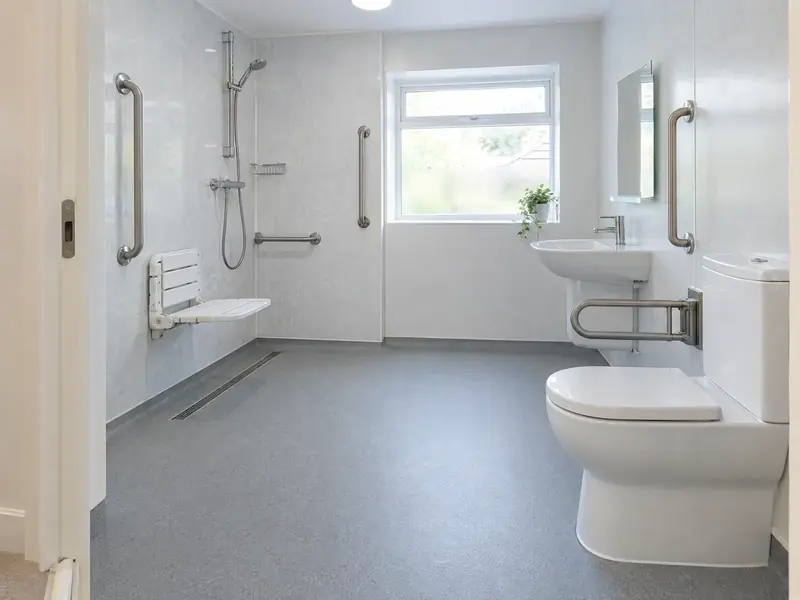
Aids and adaptations
Level-access showers, ramps, rails, stairlifts and extensions, built to an occupational therapist's recommendation.
Learn more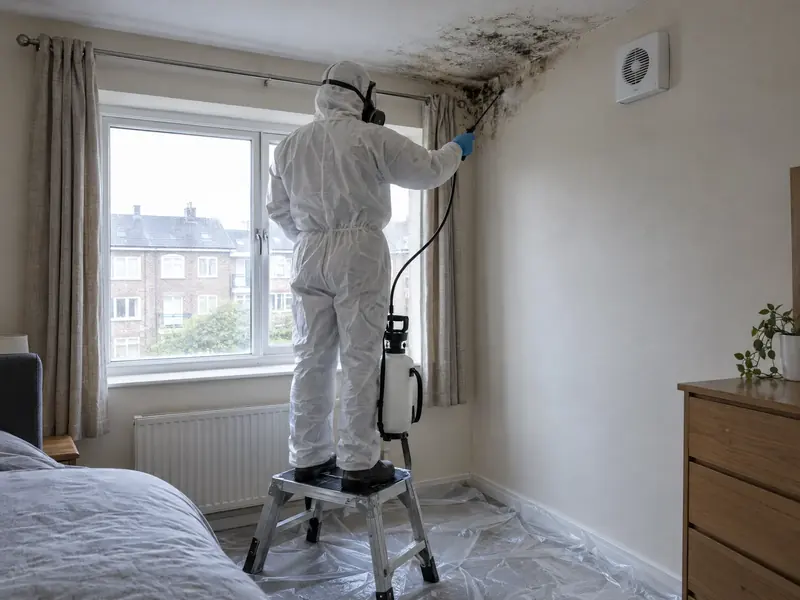
Damp and mould remediation
Mould treatment plus the fix behind it: ventilation, insulation, leaks and cold spots.
Learn moreFurther reading: Adaptations in social housing: who pays · Resident liaison on planned and occupied-home works