
Repairs and voids
Acquisition and temporary accommodation refurbishment for social landlords
Homes bought or leased by councils and housing associations, made ready for households to move in.
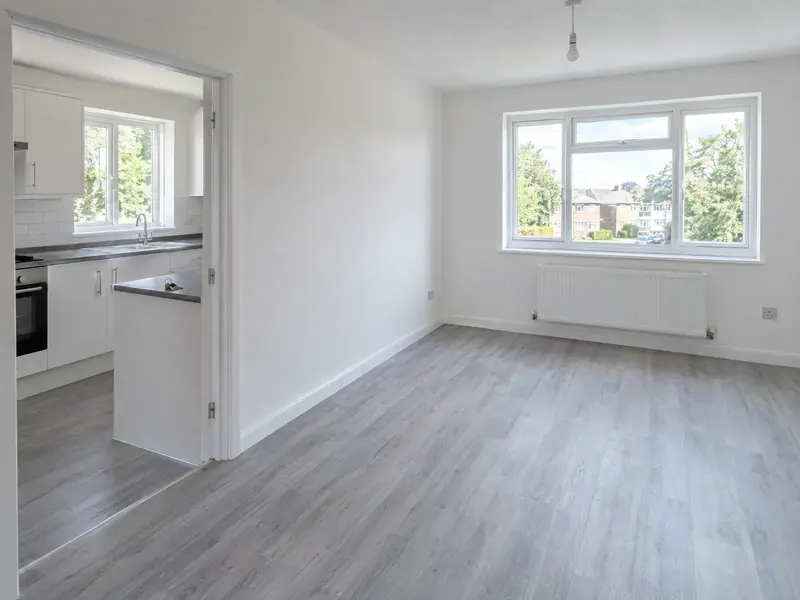
Acquisition refurbishment is the work needed to bring homes that a council or housing association has bought or leased, often for temporary accommodation or resettlement, up to its own standard before households move in. The work is similar to a major void but usually starts from an unknown condition and a tight deadline.
How do we approach acquisition and temporary accommodation refurbishment?
Councils buying homes on the open market, buying back former right-to-buy homes, or leasing properties for temporary accommodation need a contractor who can survey quickly, price accurately and work to a move-in date. We do that for single homes and for batches.
What is included?
- Condition survey on purchase or lease, with a costed scope
- Electrical and gas safety, alarms and fire safety items
- Kitchens, bathrooms, flooring and decoration to your standard
- Damp, mould, ventilation and insulation improvements
- Security: locks, door entry and window restrictors
- Furnishing coordination where your scheme includes it
- Handover pack with certificates, photos and inventory
What do we hand over at the end?
- Condition survey with costs
- Certificates for electrical, gas and alarm work
- Photo set by room
- Inventory if furnished
Who is this service for?
- Councils acquiring homes for temporary accommodation
- Housing associations buying homes back into stock
- Resettlement and refugee housing schemes
Process
How does each job run?
Pre-purchase or on-completion survey
We inspect the home and give a costed scope, so you know the true cost of making it ready.
Programme to a move-in date
We plan the works backwards from the date you need, flagging long-lead items at the outset.
Works
Safety items first, then the fabric and finishes your standard calls for.
Handover
Keys, certificates, photos and an inventory, ready for your housing team.
Rules by nation
Which rules shape acquisition and temporary accommodation refurbishment in each UK nation?
The legal duties sit with the landlord. These are the rules that set the timescales and standards we work to, as checked on 31 October 2026.
Since 1 December 2025 (new tenancies) and 1 May 2026 (existing tenancies), social landlords in England must have electrical installations inspected at least every five years and complete remedial work within 28 days, or sooner if the report says so. Electrical equipment the landlord supplies must also be checked at least every five years.
Gas work done for payment must be carried out by a member of the Gas Safe Register (Gas Safety (Installation and Use) Regulations 1998). Landlords must have each gas appliance and flue checked at least every 12 months and give the record to the tenant within 28 days. We confirm the registration of the engineer for your job in writing before appointment.
The Smoke and Carbon Monoxide Alarm (Amendment) Regulations 2022 require social landlords in England to fit a smoke alarm on every storey with living accommodation, a carbon monoxide alarm in any room with a fixed combustion appliance (excluding gas cookers), and to repair or replace faulty alarms once reported.
Social homes in England must meet the Decent Homes Standard, enforced through the Regulator of Social Housing's Safety and Quality Standard. A reformed standard, confirmed in January 2026, must be met by 2035 at the latest.
Decent Homes Standard (England)The Renting Homes (Wales) fitness regulations require a valid electrical installation condition report (EICR), no more than five years old, for social tenancies, with a copy given to the contract-holder.
Gas work done for payment must be carried out by a member of the Gas Safe Register (Gas Safety (Installation and Use) Regulations 1998). Landlords must have each gas appliance and flue checked at least every 12 months and give the record to the tenant within 28 days. We confirm the registration of the engineer for your job in writing before appointment.
In Wales, the fitness regulations require a mains-powered, interlinked smoke alarm on every storey, and a carbon monoxide alarm in rooms with a gas, oil or solid-fuel appliance.
Social landlords in Wales work to the Welsh Housing Quality Standard 2023, which has applied since 1 April 2024, with all homes to comply by 31 March 2034.
WHQS 2023 (Wales)The Scottish Housing Quality Standard requires an EICR at least every five years. The Scottish Housing Regulator has treated homes without a valid report as failing the standard since the 2021/22 return.
Gas work done for payment must be carried out by a member of the Gas Safe Register (Gas Safety (Installation and Use) Regulations 1998). Landlords must have each gas appliance and flue checked at least every 12 months and give the record to the tenant within 28 days. We confirm the registration of the engineer for your job in writing before appointment.
Since 1 February 2022 every home in Scotland has needed interlinked smoke alarms in the main living room and every hall or landing, a heat alarm in the kitchen, and a carbon monoxide alarm wherever there is a carbon-fuelled appliance or flue.
Social landlords in Scotland must meet the Scottish Housing Quality Standard, with energy efficiency rules (EESSH2) under review ahead of a new Social Housing Net Zero Standard.
SHQS (Scotland)Northern Ireland has its own housing and safety rules. We confirm the electrical inspection and remedial requirements for your homes in writing before appointment.
Northern Ireland has its own gas safety regulations, the Gas Safety (Installation and Use) Regulations (Northern Ireland) 2004, enforced by HSENI. We confirm in writing, before appointment, who will carry out any gas work and the registration they hold.
Northern Ireland has its own rules on alarms in rented homes. We fit to your specification and confirm the requirements for your homes in writing before appointment.
In Northern Ireland, the Housing Executive and registered housing associations work to the Northern Ireland Decent Homes Standard, which the Department for Communities consulted on revising in 2025–26.
Decent Homes Standard (NI)Guide prices
What does acquisition and temporary accommodation refurbishment cost?
Rounded planning figures with their sources and VAT basis. Your price depends on the survey, your specification and the region. Use our programme budget tool for a regional estimate.
| Item | Unit | Guide range | Basis |
|---|---|---|---|
| Acquisition / temporary accommodation refurbishment | per home | £8,000–£25,000 | Our estimate: For context, Local Authority Housing Fund Round 4 allows £21,000 per home for refurbishment, energy efficiency, decoration and furnishing. VAT basis: our estimate, ex VAT. |
Prices checked 31 October 2026. See all guide prices and regional factors.
Questions
Acquisition and temporary accommodation refurbishment: common questions
Can you survey before we complete the purchase?
Yes, if you can arrange access with the seller or agent. A pre-purchase scope helps you judge whether the price makes sense once works are included.
Can you work to a fixed move-in date?
Yes. We plan backwards from your date and tell you on day one if anything (such as a kitchen lead time) puts it at risk.
Do you furnish homes?
We can coordinate furniture delivery and assembly where your scheme includes it, priced separately.
Do you handle batches of acquisitions?
Yes. We can price each home separately or agree rates across a batch.
Related
Which services often go with acquisition and temporary accommodation refurbishment?
Void property works
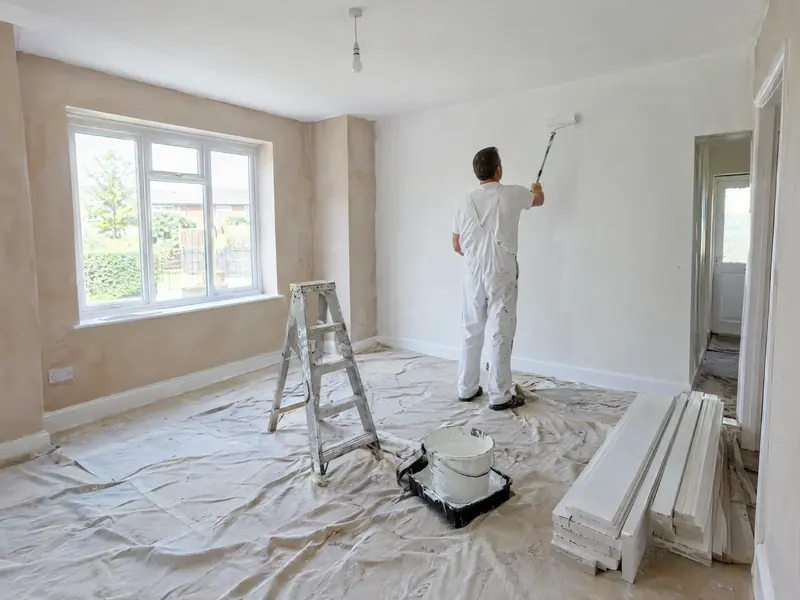
Empty homes brought back to your lettable standard, with a clear scope, a price and a handover date.
Learn more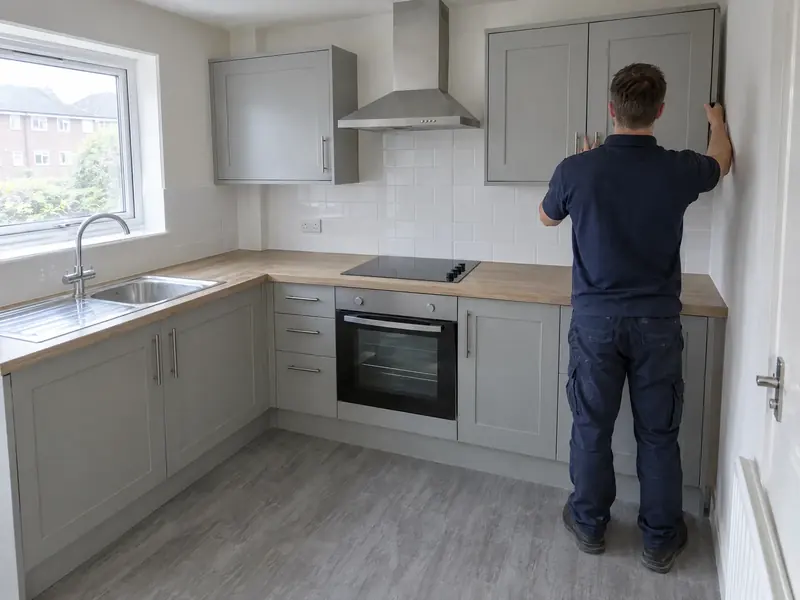
Kitchen replacement programmes
Kitchens replaced to your specification in occupied homes, planned so each kitchen is out of use for as short a time as possible.
Learn more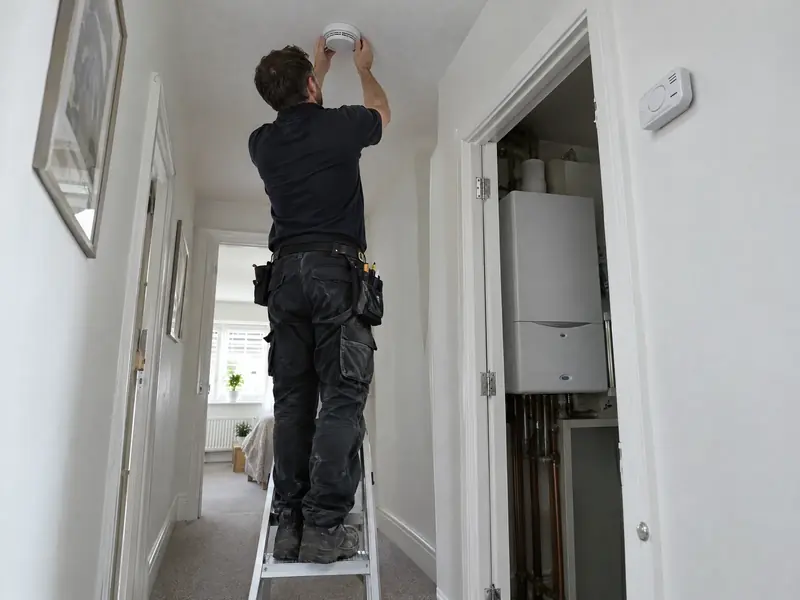
Smoke, heat and CO alarm installation
Mains-wired interlinked alarms and CO alarms fitted to the standard required in each nation.
Learn more