
Adaptations, communal areas and estates
Supported and sheltered housing refurbishment for social landlords
Refurbishment of sheltered, extra care and supported schemes while residents and staff carry on living and working there.
Supported and sheltered housing refurbishment covers works to schemes for older people, people with disabilities and people with support needs: flats, communal lounges, kitchens, corridors, alarm-call coordination and accessibility improvements. The work is done while residents live there, often with care and support staff on site.
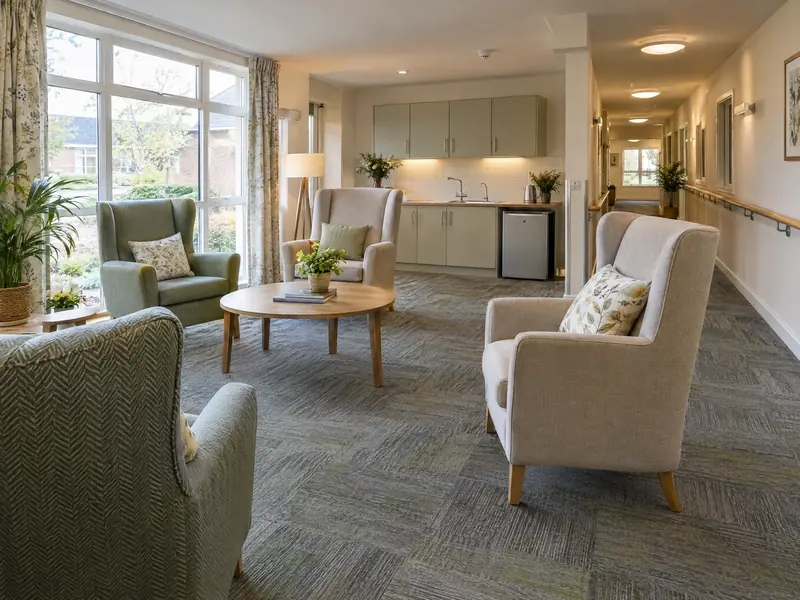
How do we approach supported and sheltered housing refurbishment?
We plan supported housing works with the scheme manager and care providers, so routines, medication rounds and access for visiting professionals carry on. Noise, dust and corridor access are planned day by day.
What is included?
- Flat refurbishment between and during tenancies
- Communal lounges, kitchens and laundries
- Corridors, handrails, flooring and lighting for accessibility
- Accessible bathrooms and level-access showers
- Coordination with warden-call and alarm system providers
- Fire safety items in communal areas
- Dementia-friendly finishes where specified
What do we hand over at the end?
- Phasing plan agreed with the scheme
- Completion photographs
- Certificates for electrical and fire safety items
Who is this service for?
- Housing associations with sheltered and extra care schemes
- Councils with supported housing
- Specialist supported housing providers
Process
How does each job run?
Plan with the scheme
We agree working hours, quiet times and access routes with the scheme manager and support providers.
Phase
Works are phased so communal facilities stay available.
Deliver
Daily briefings, clean-ups and clear signage.
Hand over
Walk-round with the scheme manager and a completion pack.
Rules by nation
Which rules shape supported and sheltered housing refurbishment in each UK nation?
The legal duties sit with the landlord. These are the rules that set the timescales and standards we work to, as checked on 31 October 2026.
Social homes in England must meet the Decent Homes Standard, enforced through the Regulator of Social Housing's Safety and Quality Standard. A reformed standard, confirmed in January 2026, must be met by 2035 at the latest.
Under the Fire Safety (England) Regulations 2022, in residential buildings with storeys over 11 metres high, communal fire doors must be checked every three months and flat entrance doors every year on a best-endeavours basis. The Fire Safety Act 2021 confirmed that flat entrance doors fall under the Fire Safety Order.
Decent Homes Standard (England)Social landlords in Wales work to the Welsh Housing Quality Standard 2023, which has applied since 1 April 2024, with all homes to comply by 31 March 2034.
Fire doors in blocks of flats are part of the building's fire strategy and are reviewed through the responsible person's fire risk assessment. Remedial work is completed to the doorset manufacturer's certified details.
WHQS 2023 (Wales)Social landlords in Scotland must meet the Scottish Housing Quality Standard, with energy efficiency rules (EESSH2) under review ahead of a new Social Housing Net Zero Standard.
Fire doors in blocks of flats are part of the building's fire strategy and are reviewed through the responsible person's fire risk assessment. Remedial work is completed to the doorset manufacturer's certified details.
SHQS (Scotland)In Northern Ireland, the Housing Executive and registered housing associations work to the Northern Ireland Decent Homes Standard, which the Department for Communities consulted on revising in 2025–26.
Fire doors in blocks of flats are part of the building's fire strategy and are reviewed through the responsible person's fire risk assessment. Remedial work is completed to the doorset manufacturer's certified details.
Decent Homes Standard (NI)Guide prices
What does supported and sheltered housing refurbishment cost?
Rounded planning figures with their sources and VAT basis. Your price depends on the survey, your specification and the region. Use our programme budget tool for a regional estimate.
| Item | Unit | Guide range | Basis |
|---|---|---|---|
| Major void (kitchen, bathroom, rewire or heating) | per void | £6,000–£15,000 | Our estimate: Built from the kitchen, bathroom and rewire rows on this page. VAT basis: our estimate, ex VAT. |
| Level-access shower / wet room conversion | per home | £4,750–£6,500 | Published figure: Independent Review of the Disabled Facilities Grant (England average £4,755, 2016/17); Habinteg (2024: £6,500+ in an older home). VAT basis: not stated (relief may apply). |
Prices checked 31 October 2026. See all guide prices and regional factors.
Questions
Supported and sheltered housing refurbishment: common questions
How do you work around residents with care needs?
Working hours, quiet times and routes are agreed with the scheme manager. Operatives are briefed on the setting before they start.
Can communal areas stay open?
We plan and phase works to keep a lounge and essential facilities available to residents.
Do operatives need DBS checks?
Many supported housing settings require them. Tell us your requirements and we will confirm in writing, before appointment, how they will be met.
Related
Which services often go with supported and sheltered housing refurbishment?
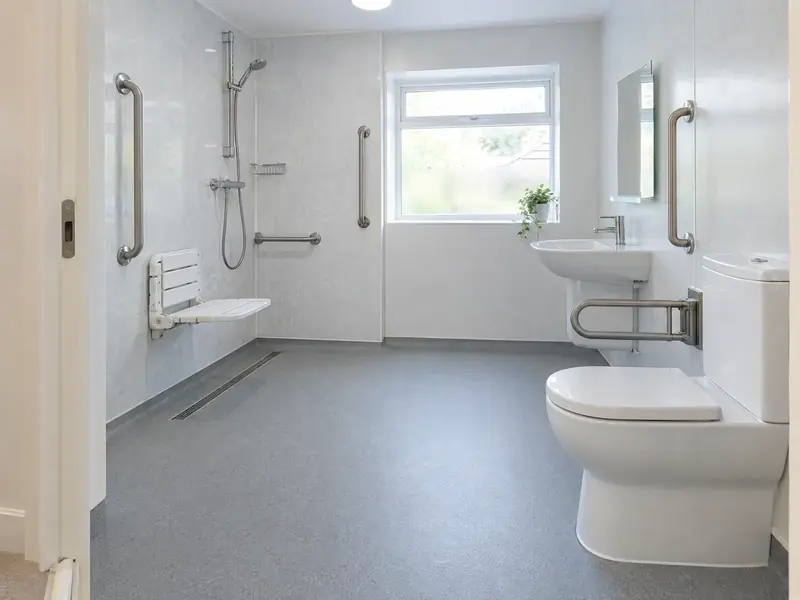
Aids and adaptations
Level-access showers, ramps, rails, stairlifts and extensions, built to an occupational therapist's recommendation.
Learn more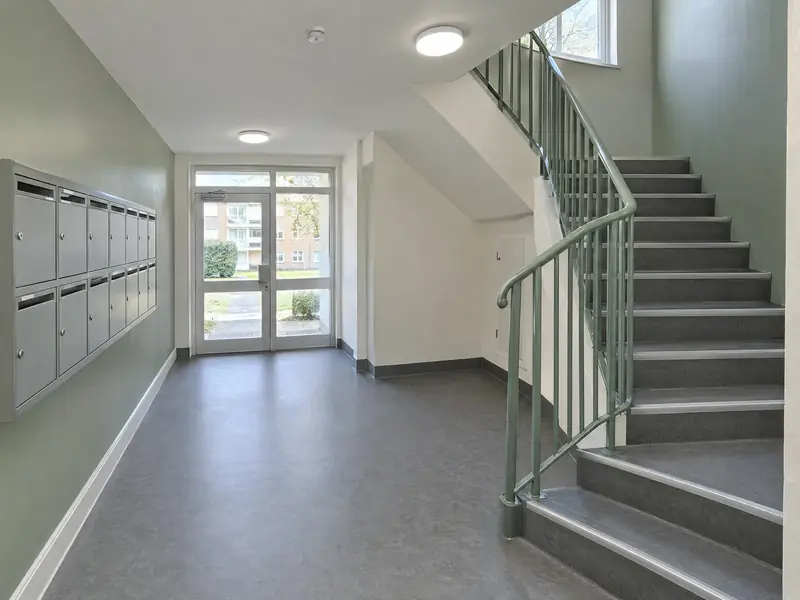
Communal area refurbishment
Entrances, stairs and landings refurbished: flooring, lighting, decoration, door entry and fire safety items.
Learn more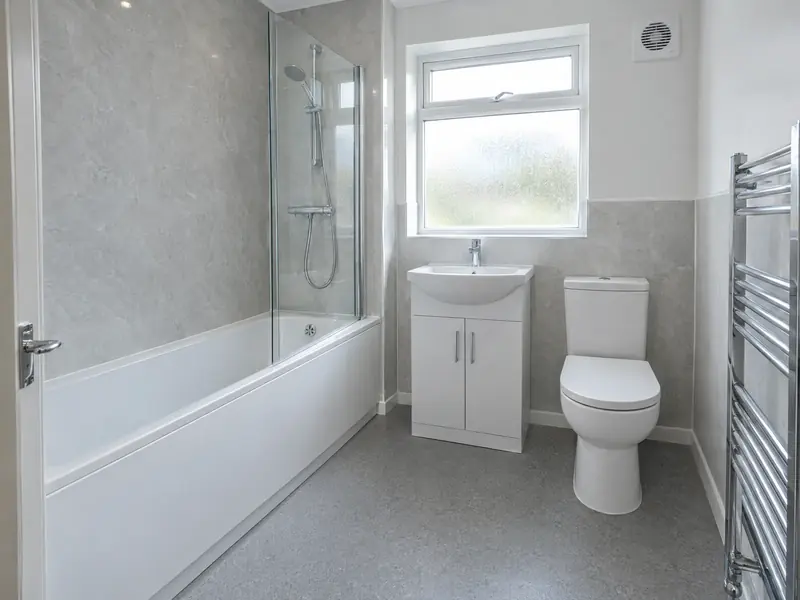
Bathroom replacement programmes
Bathrooms renewed in occupied homes, with extract ventilation, wet-wall panels and level-access options.
Learn moreFurther reading: Electrical safety in social housing: EICRs and remedials · Adaptations in social housing: who pays