
Supported and sheltered housing refurbishment · London
Supported and sheltered housing refurbishment in Islington
If a scheme in Islington needs refurbishment, we can phase the works so residents keep the facilities they rely on.
Supported and sheltered housing refurbishment in Islington is carried out by our site teams and specialist subcontractors under our management, with photographs, notes and certificates on every job. The London Borough of Islington still owns about 25,303 council homes here, alongside housing association stock.
Islington at a glance
- Council
- London Borough of Islington
- Region
- London
- Council homes
- Council-owned, managed by the council
- Approx. council homes
- 25,303 (2020)
- Housing standard
- Decent Homes Standard (England)
- Damp and mould timescales
- Awaab's Law (since 27 Oct 2025)
- Population
- 248,115 (2020 estimate)
- Regional price factor
- 1.22 (VOA 2026)
Council housing status from Housing Revenue Account records (MHCLG and the 2012 HRA list, updated for later transfers) and council publications, checked October 2026. Population: ONS 2020 mid-year estimate.
Who owns the social homes in Islington?
The London Borough of Islington still owns council homes in Islington and manages them directly, funded through its Housing Revenue Account. The latest published figure we found is about 25,303 council homes (2020). Housing associations also own and manage social homes in the area, and we can work for both.
What do we cover in Islington?
- Flat refurbishment between and during tenancies
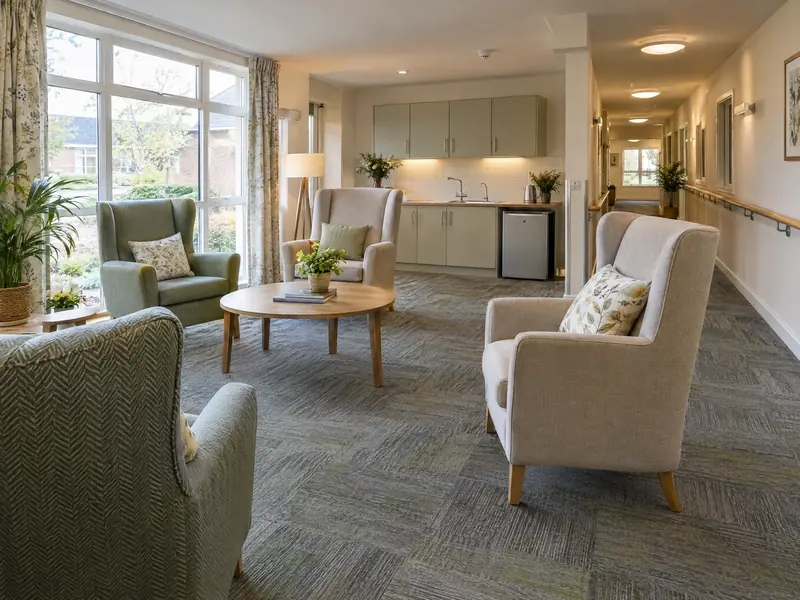
- Communal lounges, kitchens and laundries
- Corridors, handrails, flooring and lighting for accessibility
- Accessible bathrooms and level-access showers
- Fire safety items in communal areas
How do we deliver it?
Before work starts, we agree a plan with the scheme manager: working hours, quiet times, routes and how we will communicate with residents.
Which rules apply in Islington?
Under the Fire Safety (England) Regulations 2022, in residential buildings with storeys over 11 metres high, communal fire doors must be checked every three months and flat entrance doors every year on a best-endeavours basis. The Fire Safety Act 2021 confirmed that flat entrance doors fall under the Fire Safety Order.
Decent Homes Standard (England) · More about supported and sheltered housing refurbishment
What does supported and sheltered housing refurbishment cost in Islington?
Our guide range for a major void in Islington is £7,300–£18,300 per void. That is the UK range of £6,000–£15,000 (our estimate) adjusted by a regional cost factor of 1.22 (VOA Rating Cost Guide 2026: inner London 1.17–1.32, outer London 1.08–1.26); figures are before VAT where the source states it. Every job is priced after survey; specification, access and the condition of the homes will move the figure.
Questions about supported and sheltered housing refurbishment in Islington
Does the London Borough of Islington still own council homes?
The London Borough of Islington still owns council homes in Islington and manages them directly, funded through its Housing Revenue Account. The latest published figure we found is about 25,303 council homes (2020). Housing associations also own and manage social homes in the area, and we can work for both.
Which housing standard applies in Islington?
Social homes in England must meet the Decent Homes Standard, enforced through the Regulator of Social Housing's Safety and Quality Standard. A reformed standard, confirmed in January 2026, must be met by 2035 at the latest.
Can you take on supported and sheltered housing refurbishment in Islington as a subcontractor?
Yes. Main contractors working for social landlords in Islington can engage us as a tier-2 subcontractor for supported and sheltered housing refurbishment, working under their systems and their client's specification.
Other works we carry out in Islington
- Cyclical and external decoration
- Window and door replacement
- Communal area refurbishment
- Damp and mould remediation
- Planned maintenance and Decent Homes works
- Aids and adaptations
- Housing disrepair works
- External wall insulation
- Fire door installation and remediation
- Acquisition and temporary accommodation refurbishment
- Smoke, heat and CO alarm installation
- Void property works